









10 Things to Look for When Choosing a Hot Melt PSA Manufacturer in China
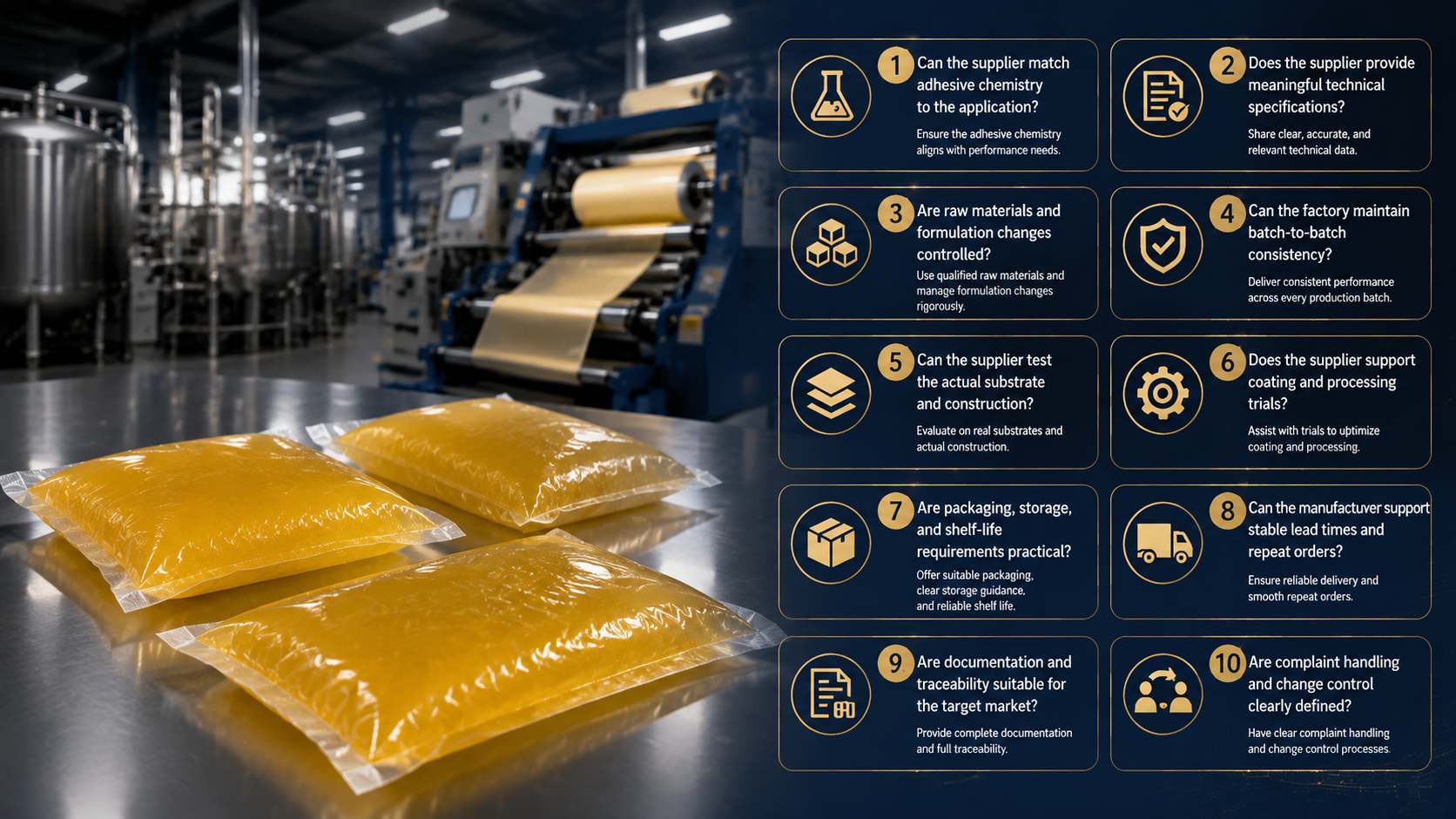
The choice of a hot melt PSA manufacturer is not as straightforward as it appears. Simply picking a supplier based on low price-performance ratio, initial sample tack or large production capacity is not enough.Buyers also need to note that the performance of pressure-sensitive adhesives can shift due to thermal exposure, long-term aging, transit conditions, or the surface energy of film substrates. For example, an adhesive suitable for paper labels may not adhere to courier bags, sanitary products, foam tapes, or car parts. Buyers should evaluate chemistry, coating behavior, testing methods, raw-material control, manufacturing consistency, documentation, and commercial support as one system. The following ten checks provide a practical basis for supplier qualification and repeat-order control.
Which technical capabilities should a hot melt PSA manufacturer demonstrate?
A manufacturer should be able to tie adhesive chemistry to the particular substrate, coating process, service temperature, and final application. Generic statements such as “it has good adhesion” do not provide the information needed to evaluate performance in a specific process such as high-temperature coating, peel strength testing, and clean liner release after long-term aging.
1. Can the supplier match adhesive chemistry to the application?
Hot melt pressure sensitive adhesives can be modified with different elastomers, tackifying resins, oils, waxes, antioxidants, and modifiers to provide variation in tack, peel, shear, viscosity, aging resistance, odor, color, and temperature resistance.
Suppliers must be asked to provide detailed info about the bonding substrate, surface treatment, coating weight, operating temperature, line speed, long-term service temperature, aging resistance, and whether the adhesive needs to be removable, the surface preparation, coating weight, process temperatures, line speed, service temperatures, aging period, and whether removal is needed. The tape for the polyethylene courier bag will have different performance requirements from those of a removable label and a permanent foam-tape construction.
2. Does the supplier provide meaningful technical specifications?
A useful data sheet should state viscosity at a defined temperature, softening behavior, recommended application range, color, form, storage conditions, and intended substrates. Peel, tack, and shear values should include the test method, substrate, coating weight, dwell time, temperature, and sample conditioning.
Numbers without test conditions are difficult to compare. Buyers should also confirm whether published data represents a typical value or a controlled acceptance limit for production batches.
How should buyers assess production and quality-control capability?
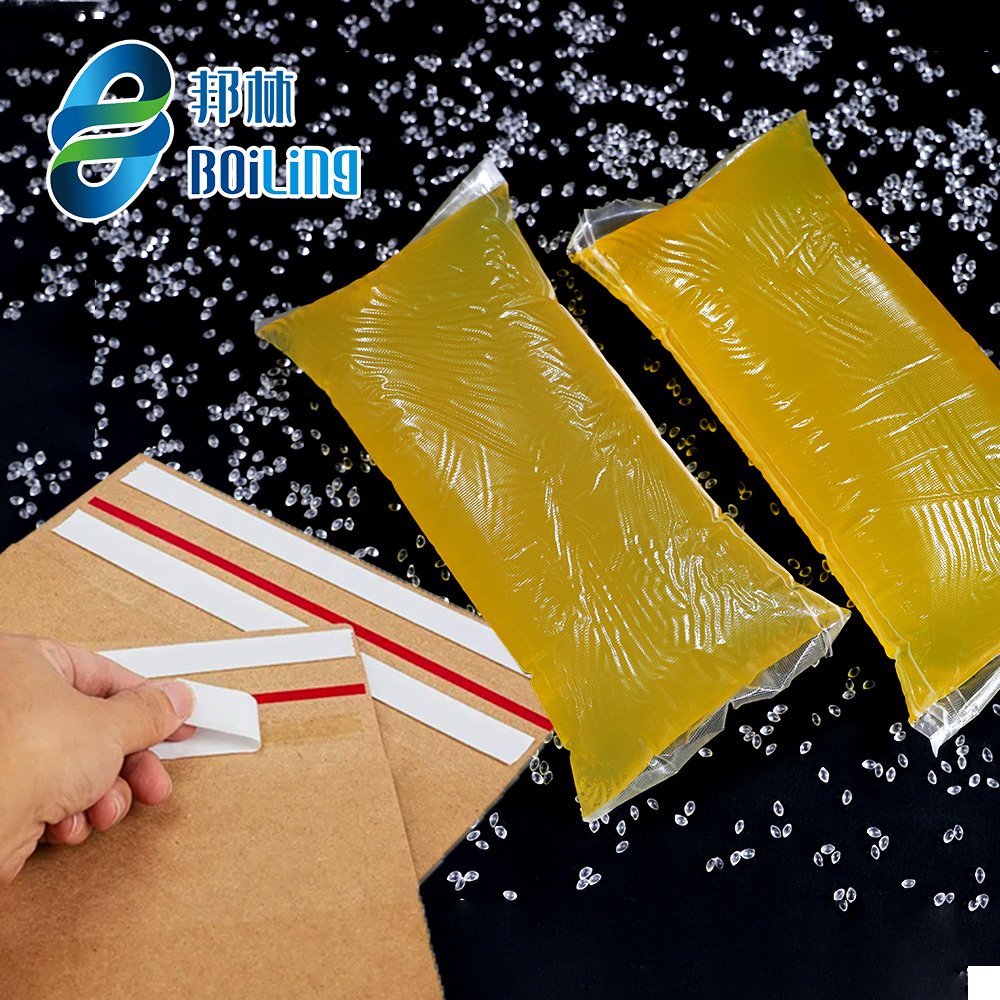
A promising laboratory sample does not prove that commercial batches will remain consistent. Hot melt PSA performance depends on raw-material variation, mixing temperature, residence time, filtration, coating conditions, and packaging control.
3. Are raw materials and formulation changes controlled?
The manufacturer must establish a list of critical raw material categories and maintain control over approved suppliers. Changes in tackifier, polymer, oil, antioxidant or processing aid may cause different adhesive properties, such as adhesion, odor, color, viscosity and/or aging, even if the formula has not changed.
Purchases contracts should include a requirement for notification of changes in formula or raw materials. Maintained samples and batch records are useful indicators for identifying the cause of a later failure, such as adhesive, substrate, a process, or storage conditions.
4. Can the factory maintain batch-to-batch consistency?
Physical tests should cover viscosity, color, appearance, softening properties, coating response, and adhesion relevant to application. Clear standards must be defined for sampling, batch coding and finished product release, instead of vague general requirements.
Buyers need to confirm how the factory segregates non-conforming adhesive batches and what steps are taken to control the process so that reprocessing batches are not introduced. Insufficient mixing or overheating will create gels, black particles and strange odors, as well as unstable viscosity. These issues will clog pumps, nozzles and die orifices, resulting in uneven coating.
Which testing and application support reduce development risk?
Adhesive selection cannot be completed from a data sheet alone. The final result depends on the adhesive, substrate, coating weight, equipment, pressure, aging, and use environment.
5. Can the supplier test the actual substrate and construction?
Buyers should provide representative film, paper, foam, nonwoven, release liner, or laminated material. Testing the actual construction is more useful than relying on a standard steel panel when the application uses treated polyethylene or coated paper.
Trial work should reproduce realistic coating weight, lamination pressure, dwell time, and aging. For temperature-sensitive projects, samples should be conditioned at expected storage and service temperatures before peel, tack, or shear evaluation.
6. Does the supplier support coating and processing trials?
A technically suitable adhesive may cause production issues by having an inappropriate viscosity, open time, or thermal stability. The manufacturer should specify information on tank temperature, hose temperature, die or nozzle settings, line speed, filtration, and shutdown procedures.
During the trial, the buyer should check for such problems as stringing, edge buildup, smoke, odors, gels, streaks, poor wetting, and coat weight. Process observations should be made with the test results to indicate acceptable grade and corresponding process window.
What commercial and operational factors matter before approval?
Technical performance is central, but supply continuity, packaging, lead time, and communication determine whether the adhesive can support routine manufacturing.
7. Are packaging, storage, and shelf-life requirements practical?
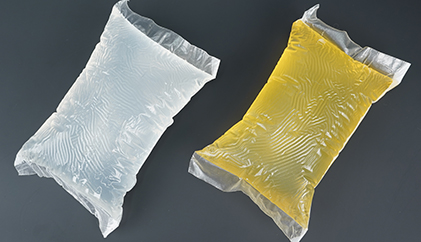
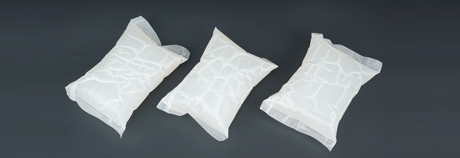
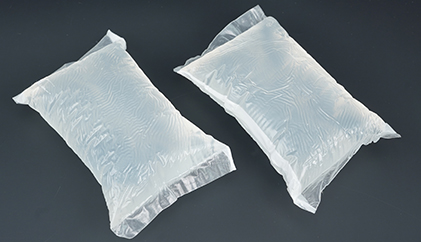
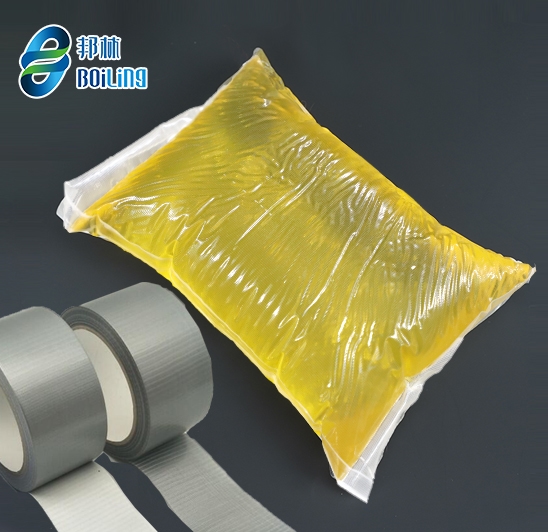
Hot melt PSA may be supplied as blocks. The package should protect glue from dust, moisture, deformation, and contamination. It should also be compatible with the user’s melting equipment and method.
In addition, buyers should clarify the net weight, packaging material, pallet layout, storage temperature, shelf life, and rotation method. Adhesive packaging that sticks together, breaks during handling, or contains foreign matter may interfere with production, even if the glue itself is suitable.
8. Can the manufacturer support stable lead times and repeat orders?
Lead time should include raw-material preparation, production scheduling, inspection, packing, and transport. A small initial price quote may be attractive but if further orders experience unpredictable delays or the raw materials become unavailable, the price will be of little comfort.
Buyers should confirm the minimum order quantity, production cycle time, possibility of emergency order, forecasted needs, and batch size limitations. If there is a possibility of long-term cooperation, it may be of interest to know how the supplier plans to cope with raw material shortages or discontinuation.
How can buyers verify supplier reliability before placing volume orders?
Supplier qualification should combine documents, trial results, factory practices, and commercial terms. One successful sample is only the beginning of the process.
9. Are documentation and traceability suitable for the target market?
Documents may include technical data sheets, safety information, batch certificates, material declarations, and application-specific compliance records where required. Each document should refer to the correct product grade and current formulation.
Batch codes should connect finished adhesive to production and inspection records. Private-label buyers should also confirm label content, packaging artwork, product naming, and responsibility for destination-market requirements. Certifications or regulatory claims should be verified rather than accepted from sales literature alone.
10. Are complaint handling and change control clearly defined?
Before ordering, buyers should agree on inspection criteria, sample retention, claim procedures, evidence requirements, and response time. A complaint process should distinguish adhesive defects from substrate changes, incorrect coating temperature, contamination, excessive coating weight, or unsuitable storage.
Change control is equally important. The manufacturer should notify the buyer before changing formulation, key raw materials, manufacturing location, packaging, or test method. Approved samples and specifications should remain the reference for repeat-order comparison.
How can a Chinese hot melt PSA supplier support product qualification?
Hangzhou Boiling Adhesive Technology Co., Ltd. can provide hot melt tape adhesives for all kinds of packaging, labels, tapes and related converting. The buyer shall supply substrates, coating weight, line speed, applying temperature, service conditions, and requested peel, tack or shear properties. Trial samples can be tested on the specified substrates and coating equipment. Quotations must clearly state adhesive grade, packaging form, storage requirements, lead time, MOQ, testing indicators and other terms. Before mass production, both parties shall agree on adhesive sample, process parameters, test method, acceptance criteria, change notification requirements and other contents, so as to provide a basis for incoming inspection and subsequent order.
Conclusión
Selecting a reliable Chinese hot melt PSA supplier requires comprehensive technical assessment and standardized procurement management.Consideration should be given to formulation capability, data, raw-materials control, batch to batch variation, substrate testing and compatibility, coating and packaging, lead time, traceability, and complaint handling. The best approach is to test the material on the final construction under anticipated conditions and then specify controlled material with retained samples. This will help avoid accepting samples that pass testing but fail when applied in the final process, or which pass but then degrade with time.
Preguntas frecuentes
1. What information should I send to a hot melt PSA manufacturer in China?
Provide the substrate, coating method, coat weight, application temperature, line speed, service temperature, aging conditions, packaging format, and required peel, tack, shear, or removability performance.
2. How should buyers compare hot melt PSA samples?
Apply each sample at the same coating weight and process conditions, then compare wetting, tack, peel, shear, aging, temperature resistance, odor, color, and coating stability on the actual substrate.
3. Why can two batches of hot melt PSA perform differently?
Differences may come from raw-material variation, mixing temperature, thermal history, filtration, contamination, viscosity drift, packaging, storage, or unapproved formulation changes. Batch records help identify the cause.
4. Is the lowest-priced hot melt PSA usually the most economical choice?
Not necessarily. Buyers should compare adhesive consumption, coating efficiency, scrap, downtime, filter changes, complaints, and rejected products. Cost per accepted finished item is more useful than price per kilogram.
5. What should a hot melt PSA quotation include?
It should identify product grade, packaging form, net weight, minimum order quantity, lead time, storage conditions, shelf life, technical data, inspection items, payment terms, and change-control requirements.
 Consultar
 Aplicación Whatsapp
 Dejar mensaje
 arriba