






Best Adhesive for Thermal Shipping Labels: Avoid Curling, Edge Lifting and Printer Jams
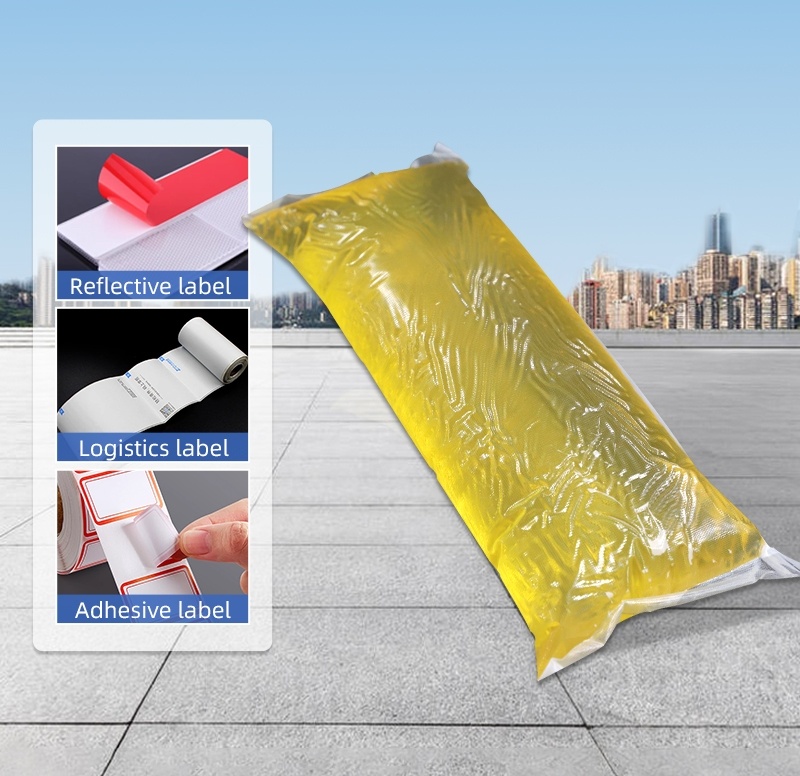
Thermal shipping labels have become a crucial component of any efficient logistics operation. However, they can cause a great deal of problems for businesses. These can include label curl, edge lifting, and worst of all, printing failures such as jams which can cost businesses dearly in terms of lost time and increased operational costs. Although the adhesive forms the majority of a label and plays a huge part in the way that a label performs when under stress, it is often an afterthought and is hidden from view behind the facestock. When selecting a hot melt pressure sensitive adhesive or a pressure sensitive hot melt adhesive for use with thermal shipping labels, the tack of the adhesive is not the only consideration. The adhesive must also perform consistently over a long period of time and remain stable in hot, humid conditions as well as when stored for long periods. In this article we will be taking a look at the chemistry behind the majority of label adhesives as well as ways in which printing failures can be prevented. We shall also be looking at the recommendations of labeling experts for ensuring that the very best results are achieved on a consistent basis.
Why Do Thermal Shipping Labels Curl or Lift at the Edges?
When analyzing problems with label performance it is important to establish the physical and environmental circumstances that cause the label to deform or lose adhesion.
Factors Behind Label Curling
When adhesive and facestock material change in temperature and/or humidity, they can grow or shrink at different rates causing the label to curl. This problem typically arises from coatings not being as thick as required or from uneven adhesive distribution. Additionally, how a company stores their rolls of labels prior to printing can create distortions to the rolls before they even make it to the printer. For example, in a typical warehouse the area near heating vents is typically where the labels are stored and pre-printed curling are encountered by companies using labels in this area more than other areas of the warehouse.
Causes of Edge Lifting During Application
Edge lifting is one of the most frequent problems that occur during the application of self-adhesive products. Labeling low surface energy substrates such as cardboard made of recycled fibers requires special adhesives. In addition to that, dirt such as dust, oil or even water on the surface of the substrate impairs the adhesion. Furthermore, not sufficient pressure during the labeling process can cause air to be caught between the adhesive and the label. During subsequent handling or transport, the air that has been caught between the edges of the label then peels off.
What Role Does Adhesive Chemistry Play in Label Durability?
The chemical composition of an adhesive influences its mechanical behavior under load and the way it withstands environmental influences.
Comparing Hot Melt Pressure Sensitive Adhesives vs. Acrylic Formulations
Hot melt pressure sensitive adhesives (HMPSA) offer the immediate tack and high initial adhesion to rough surfaces that today’s packaging lines demand. In contrast, acrylic adhesives offer superior UV resistance but are less than ideal in very low temperature applications. As tested in accordance with the ASTM D3330 peel adhesion on cardboard, HMPSA’s maintain greater than 95% adhesion after 48 hours in variable humidity storage rooms. This is why HMPSA’s are typically the adhesive of choice for thermal shipping labels that are used in shipping across many different climates.
Key Properties That Affect Long-Term Performance
There are a number of properties of materials used in labels that affect the durability of the label over time.
-
Cohesive strength prevents slippage during thermal printing.
-
Shear resistance keeps labels flat under mechanical stress from conveyors.
-
Aging stability ensures that tackiness doesn’t deteriorate due to oxidation or UV exposure in warehouse environments.
How Can Proper Adhesive Selection Prevent Printer Jams?
The adhesive formulation affects the printhead cleaning and the feed behavior of thermal printers.
The Relationship Between Adhesive Flow and Printhead Temperature
Hot printheads during printing can soften up adhesives. Very soft adhesive formulas can leak out of the label edges and accumulate on printing rollers and printheads, causing problems like printing jams or crooked prints. The viscosity of a pressure sensitive hot melt adhesive is crucial and needs to be controlled in such a way that it is able to flow in a stable way during extended running hours.
Label Release Liners and Their Impact on Printer Feed Consistency
The release liner plays a critical role in ensuring smooth feeding of the printer. The use of a silicon coated liner with a consistent release force will aid in preventing misfeeds in high speed printing situations. The research by TLMI (Tag & Label Manufacturers Institute) into printing jams stated that 12% of jams in thermal printing were caused by inconsistent release from the liner.
How Do Environmental Conditions Influence Adhesive Performance?
Environmental exposure is typically the greatest challenge to a label’s integrity throughout a shipper’s various cycles of shipping.
Temperature Resistance and Cold Chain Logistics
In cold chain logistics—where goods are stored below freezing—adhesives must retain flexibility without cracking at temperatures as low as -20°C. Formulations with low glass transition temperatures (Tg) allow labels to remain pliable while preserving bond strength on frosted packaging surfaces.
Humidity and Long-Term Storage Effects
In high humidity environments, the adhesive can migrate or lose its peel strength. A good formulated label will not absorb too much moisture and will stick well to corrugated boxes that are typical in most e-commerce fulfillment centers. We have customers store their labels in climate controlled rooms and they don’t experience any detachment after long time storage. In contrast, customers that store their labels in open air warehouses tend to experience more detachment.
What Are Practical Tips for Avoiding Label Failures in Production Lines?
While the chemistry is important, even more so are the practices you implement in your day to day operations to achieve high labeling success rates.
Storage and Handling Best Practices
Seal label rolls that are not in use to prevent them becoming contaminated with dust which could prevent the label from adhering. Store at temperatures between 18°C and 25°C and with relative humidity below 60%. Try to avoid stacking heavy boxes on top of boxes of unused rolls as they could be compressed which may affect the facestock curvature and subsequent printing quality.
Printer Maintenance for Clean Label Application
Printheads should be regularly cleaned to remove residue which could transfer to new labels. Feed tension should be calibrated from time to time to ensure labels are correctly aligned during application to prevent labels from being printed skew, resulting in curling edges after application.
How Can Hangzhou Boiling Adhesive Technology Co., Ltd. Support Reliable Label Performance?
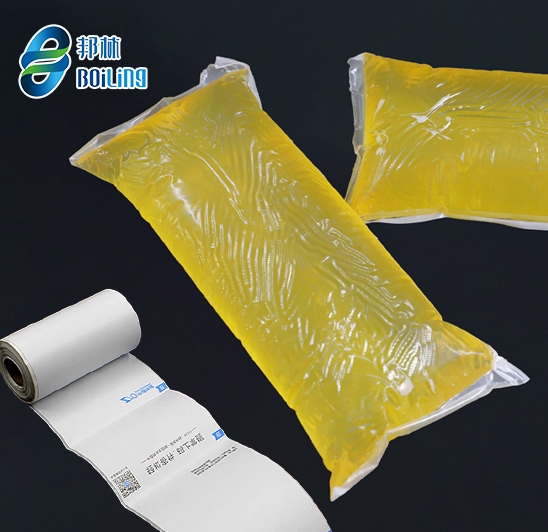
Drawing from decades of R&D experience in label adhesive glue development, Hangzhou Boiling Adhesive Technology Co., Ltd. collaborates closely with logistics firms and packaging converters to create tailored HMPSA solutions suited for various environments. The company offers customized formulations based on substrate type and printer speed requirements while conducting on-site evaluations for large-scale labeling operations to reduce downtime risks. Its continuous product testing aligns with international standards such as FINAT FTM9 for peel adhesion performance—providing industrial clients with data-backed reliability rather than generic claims.
Wniosek
Choosing the right adhesive for thermal shipping labels has become a matter of both technical merit and cost in business. In order to avoid waste from misprinted labels or detachment failures in shipping, a printer’s chosen adhesive must be able to adapt to its operating environment. For most applications, hot melt pressure sensitive adhesives are the smart choice. These provide the required initial tack and are able to withstand a wide variety of temperatures. The wise label user bases his or her choice of adhesives on hard data, and works with a knowledgeable adhesive expert to fine-tune their choice to best run their operation in their global network of distribution centers and other sites. This allows them to run smoothly, print labels smoothly and consistently, and avoid unnecessary printer downtime.
Często zadawane pytania
1. What is the main difference between hot melt pressure sensitive adhesives and water-based adhesives?
Hot melt versions solidify quickly upon cooling, providing instant tack without drying time; water-based types rely on evaporation, which can slow production speed.
2. Can high-temperature environments cause damage to thermal label adhesives?
Yes, they can. At higher-than-recommended service temperatures the adhesive can become too soft and stick to surfaces such as smooth carton boxes and leave smears or peel off.
3. Can one check if the currently used adhesive is suitable for a certain substrate?
Performing standardized peel tests (e.g. ASTM D3330) on different surface materials and checking the test results for initial tack as well as for the aged adhesion values.
4. Why do some labels jam, even with premium printers?
Usually it’s not the printer itself but misaligned feed caused by uneven liner release force or excessive adhesive migration.
5. How do you store unused thermal labels?
Yes, there is an ideal storage for unused thermal labels. Store them flat at room temperature (18-25°C) in the dark, i.e. away from direct sunlight and moisture sources. This way facestock and adhesive are kept in optimal condition.
 Skonsultuj się
 aplikacji Whatsapp
 Zostaw wiadomość
 góra
góra