






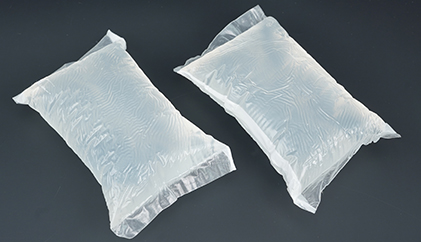

Conquering Label Lifting on Curved Surfaces: High Initial Tack Hot Melt for PET Bottles
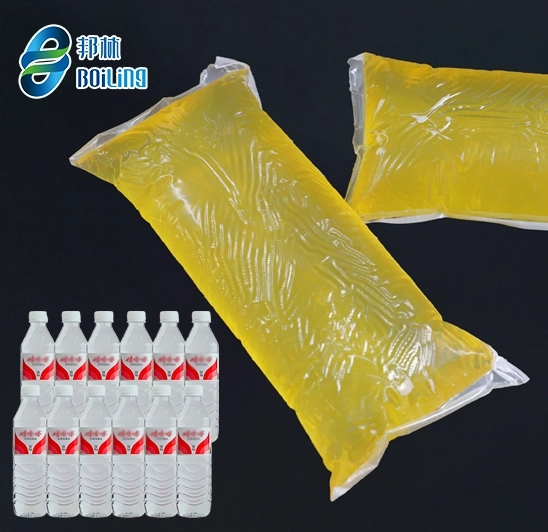
Label lifting on curved surfaces of PET bottles remains a frequent issue in high-speed production. It occurs most often at the bottle shoulder and neck areas. During application, the label fails to adhere fully. Edges rise shortly afterward. This leads to increased defects. Production lines halt for corrections. Product appearance suffers on retail shelves.
The problem affects many in the beverage sector. PET bottles feature pronounced curves. These demand adhesives with immediate and robust bonding capability. High initial tack hot melt, a pressure-sensitive variety, addresses this challenge effectively. It forms a strong bond upon first contact. Labels conform closely to curved contours without delay.
This article examines the causes of label lifting on curved PET surfaces. It focuses on conditions typical of fast labeling lines. It then details how high initial tack hot melt resolves the issue. Readers will find practical insights. These include steps to reduce defects. Methods to maintain continuous operation. Approaches to achieve consistent, professional bottle presentation.
Why Labels Lift on Curved PET Surfaces
PET bottles are widely used for bottled water and carbonated beverages. The material is lightweight and transparent. It allows flexible shaping. However, the contours create difficulties during labeling. Curved areas place continuous tension on the label material. Flat surfaces bond more readily. Curved sections resist uniform contact. Edges tend to separate as a result.
High-speed labeling intensifies the difficulty. Modern lines process 30,000 to 40,000 bottles per hour. The time available for adhesion becomes extremely brief. Adhesives with insufficient initial tack permit minor movement. The label does not settle completely on the shoulder. Lifting begins soon after application.
Moisture contributes significantly. Cold-filled bottles develop condensation on the surface. Even a thin layer interferes with bonding for many adhesives. Residues from bottle blowing, filling, or handling further reduce surface energy. These factors combine to prevent reliable adhesion.
One documented case involved a bottled water producer. During warm months, shoulder lifting affected approximately 20 percent of output. High ambient humidity combined with chilled bottles. Edges detached in storage facilities. Customer returns increased noticeably. Production schedules were disrupted for repeated corrections. The root cause traced back to inadequate initial tack under those specific conditions.
Key Triggers for Lifting on Shoulders and Necks
- Curve-induced tension: The shoulder contour exerts outward force on the label edges.
- Limited application time: High-speed equipment allows almost no dwell period for bonding.
- Surface conditions: Condensation, minor oils, and the inherently low surface energy of PET reduce contact effectiveness.
- Temperature variations: Transition from cold fill to ambient storage causes differential expansion or contraction.
In large-scale beverage facilities, even modest lifting percentages translate to substantial losses. Thousands of units may require rework or disposal. Line stoppages accumulate. Brand perception declines when imperfect labels reach consumers.
How High Initial Tack Hot Melt Fights Back
High initial tack hot melt performs reliably where conventional adhesives fall short. This pressure-sensitive formulation applies at temperatures between 150°C and 180°C. It spreads evenly across the label. Cooling occurs rapidly. The defining characteristic lies in its immediate and forceful adhesion upon contact.
The adhesive secures the label to curved PET surfaces without hesitation. Shoulders and necks receive uniform pressure. Movement is minimized. Edge separation is largely prevented.
The composition typically incorporates a synthetic rubber base. This provides necessary elasticity. It accommodates the stresses imposed by bottle contours. Viscosity levels near 1100 cps at operating temperature support consistent application. Stringing and residue buildup remain low on high-speed equipment.
Optical clarity is maintained. Transparent film labels retain their intended appearance. No discoloration develops during storage. Odor levels stay minimal. Compliance with food-contact regulations is straightforward. The bond withstands refrigeration without becoming brittle.
Standout Features That Matter
Several properties distinguish high initial tack hot melt in PET bottle applications:
- Rapid initial adhesion: The label bonds firmly at the moment of contact.
- Adaptation to contours: Flexibility allows conformity to curved geometries without detachment.
- Compatibility with high speeds: Application remains clean with reduced stringing or carbon deposits.
- Tolerance to surface moisture: Bonding proceeds effectively even with light condensation present.
- Durable final strength: Peel resistance develops promptly and persists through handling and distribution.
The table below summarizes key differences:
|
Característica |
Standard Hot Melt |
High Initial Tack Hot Melt |
|
Initial Grab |
Moderado |
Aggressive |
|
Performance on Curves |
Prone to lifting |
Strong hold on shoulders/necks |
|
High-Speed Suitability |
Stringing common |
Clean run, low defects |
|
Moisture Tolerance |
Weak with condensation |
Reliable on damp PET |
|
Defect Reduction |
Higher lifting rates |
Cuts edge issues sharply |
Facilities that adopt this adhesive frequently observe marked improvements. Rejection rates often decline from 8–10 percent to below 1 percent. Operational efficiency increases. Maintenance intervals extend.
Real Examples from Beverage Lines
Consider clear PET bottles for mineral water. Filling occurs at low temperatures. Condensation appears promptly. Labeling proceeds at 35,000 units per hour. Conventional adhesives permit shoulder lifting. Transition to high initial tack hot melt eliminates the problem. Labels remain securely attached throughout cold storage and distribution.
Carbonated beverages present additional challenges. Internal pressure causes slight bottle expansion. Neck contours are pronounced. The aggressive initial tack maintains adhesion despite vibration during transport.
Similar results appear in fruit juice and ready-to-drink tea packaging. Bottle shapes vary. Yet consistent bonding prevents edge issues. Retail returns decrease. Product presentation remains professional from production to point of sale.
Picking the Right High Initial Tack Hot Melt
Selection requires attention to specific line parameters. Compatibility with the substrate is essential. PET surfaces demand formulations that wet out effectively on low-energy plastics.
Application equipment influences the choice. Roller systems and spray heads each impose different viscosity requirements.
Fill temperatures must be considered. Cold processes favor adhesives with enhanced moisture tolerance.
Practical testing on the actual line provides the most reliable data. Small-scale trials reveal performance on shoulders and necks.
Additional recommendations include:
- Conduct initial trials with production samples.
- Monitor application temperature closely to avoid carbon formation or poor flow.
- Implement regular cleaning of applicator heads.
- Request formulation adjustments for unusually demanding contours or speeds.
Proper matching yields lower defect levels and more stable production.
About Banglin: Your Trusted Hot-Melt Adhesive Supplier
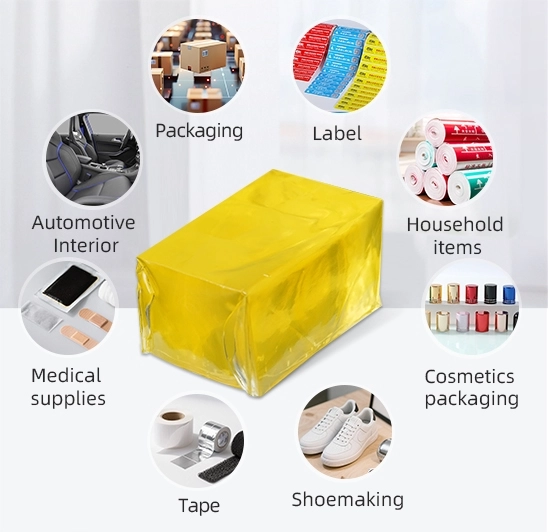
Banglinworld. kgm Adhesive, operating out of Hangzhou since 2005, builds reliable hot-melt solutions for packaging professionals. As a high-tech outfit with a large factory and consistent daily output, they supply HMPSA, APAO, and related products to thousands of customers across multiple industries. Their research and development team draws on decades of specialized experience. Custom formulations emerge from an advanced laboratory supported by patents and precision equipment. For bottle labeling and broader packaging needs, Banglin provides targeted adhesive solutions. These enhance performance while controlling costs. Technical assistance, prompt delivery, and environmentally conscious options position them as a dependable resource for complex adhesion requirements.
Conclusão
Label lifting on the curved surfaces of PET bottles—particularly at shoulders and necks—need not disrupt high-speed operations. High initial tack hot melt supplies the rapid, secure bonding required. It overcomes contour challenges, accommodates production speeds, and substantially reduces defects. Adoption leads to improved output quality, minimized waste, and bottles that maintain an attractive appearance throughout the supply chain. Facilities facing persistent lifting issues benefit from evaluating this adhesive type.
FAQ
What usually causes label lifting on curved PET bottle surfaces like shoulders?
Curved geometries generate outward tension on label edges. High-speed application limits contact time. Surface moisture from cold filling further complicates bonding. High initial tack hot melt provides immediate adhesion. It secures the label despite these conditions.
How does high initial tack hot melt prevent lifting on high-speed lines?
It establishes a firm bond at the instant of contact. Labels seat fully on shoulders and necks before any displacement occurs. Edge lifting decreases significantly during subsequent handling and distribution.
Is high initial tack hot melt suitable for cold-filled PET water bottles?
Yes. It bonds effectively through light condensation typical of chilled products. The strong initial tack overcomes surface dampness. The resulting adhesion remains stable from refrigeration to retail display.
Can high initial tack hot melt perform reliably on very fast labeling machines?
It does. Smooth flow and minimal stringing maintain clean operation. Applicator heads experience reduced buildup. The adhesive supports throughput rates of thousands of bottles per hour with low defect incidence.
Where can suitable high initial tack hot melt for PET bottle curves be obtained?
Banglin Adhesive develops formulations tailored to these applications. Contact them to request samples. They modify compositions to align with line speed, bottle design, and filling parameters.
 Consultar
 Whatsapp
 Deixar Mensagem
 cima
cima