









How to Choose Hot Melt Tape Adhesive for High Speed Tape Coating Lines
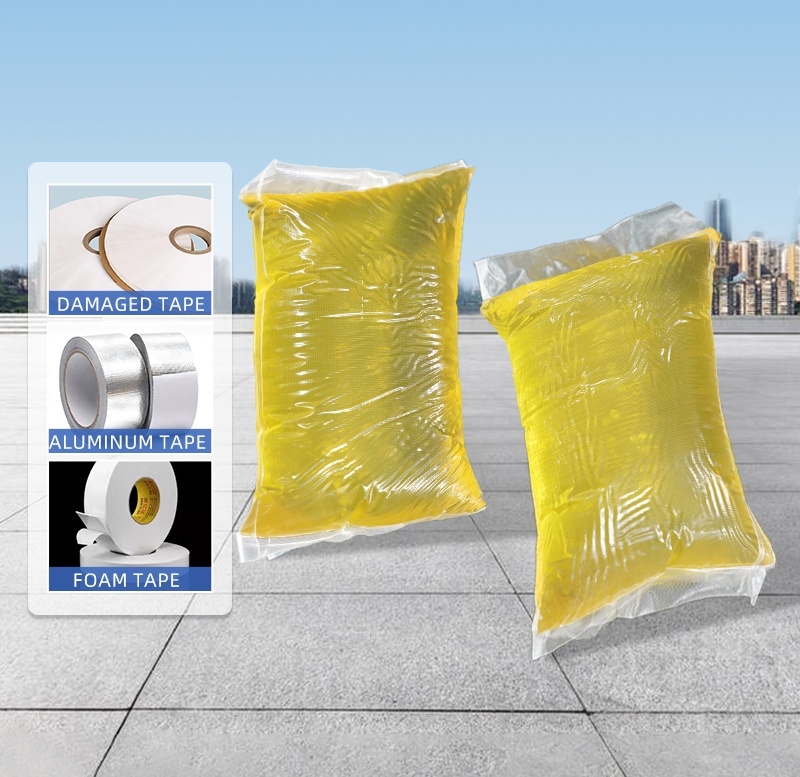
Hot melt tape adhesives are used in the majority of modern high-speed tape coating lines. Operation of such lines is based on high production rates and constant quality of applied tapes. This is only achievable through precise control of adhesive formula. Even slight variation in viscosity or open time can result in defects in tape application or in adhesive bonding. Selecting suitable hot melt tape adhesive is a task which requires assessment of several parameters. In this article we shall discuss how to use given data in order to select a suitable adhesive for operation at speeds of over 500 m/ min.
What Factors Determine the Performance of Hot Melt Tape Adhesives in High-Speed Coating Lines?
Balancing the physical/mechanical properties of adhesives with processability to meet demands of high speed application.
Key Physical Properties That Influence Coating Efficiency
Viscosity is one of the most critical attributes in high-speed coating. At line speeds above 500 m/min, adhesives with tightly controlled viscosity prevent stringing and uneven film formation. Tack and open time determine how well the adhesive bonds when substrates contact briefly during rapid processing. Too short an open time leads to poor wet-out; too long may cause contamination or transfer issues. Thermal stability also plays a decisive role—adhesives must resist degradation or charring under continuous operation at elevated temperatures, typically around 160–180°C.
The Role of Substrate Compatibility in Adhesive Selection
Adhesion properties differ greatly between various types of substrates like BOPP, PET and PVC films. The adhesives are affected by the surface energy and the wetting properties of the respective films. For instance, untreated BOPP films generally require primer coatings in order to achieve the desired level of adhesion. By testing adhesion under realistic production conditions it is possible to predict the long-term adhesion behavior and to prevent delamination during storage as well as later use.
How Does Production Speed Impact Adhesive Choice?
With increased pressure to meet production targets, the speed of coating lines has become an important factor in determining process stability. Adhesive rheology and heat management in particular are crucial for ensuring a stable process.
Balancing Line Speed with Coating Uniformity
As production line speeds are increased, the adhesive film is subjected to higher shear rates. This affects the flow behavior of the adhesive at the die head. By selecting the optimal adhesive formula in terms of its rheology, the risk of splashing or edge build-up is prevented, which would otherwise result in waste and the need for rework. In addition, uniform coating weights on wide web materials are critical to achieve stable tape properties. In packaging tape production, any lack of material leads to significant losses for large volume producers.
Managing Heat Transfer During High-Speed Operation
Severere heating up- and cool-down-cycles put a lot of stress on adhesive systems. The formulations must have a stable melt-character in order to prevent gelling or oxidation during continuous usage. Also, adhesives in energy-efficient production processes must have a low viscosity at moderate temperatures (around 160 to 180 °C) in order to save energy for example for coating. A continuous online measurement of the temperature is also important in order to guarantee an optimal application also during night- and weekend shifts.
Why Is Peel Strength and Cohesion Balance Critical for Tape Applications?
Peel strength and cohesion define how a finished tape performs in end-use scenarios like packaging, labeling, or masking.
Evaluating Peel Strength for End Use Performance
The peel adhesion of adhesive tapes is usually determined by means of standardized tests such as ASTM D3330. These are usually conducted under defined test conditions in order to determine the so-called holding force. Tapes with high peel strength are also capable of greater load bearing, but this is often at the expense of repositionability. The adhesive tack can be influenced by the ratio of the resin content to the tackifier content and, for example, can be adjusted by the manufacturer for particular areas of application on the market.
The Importance of Cohesion in Long-Term Durability
Failure within the adhesive itself indicates insufficient internal strength or imbalance in adhesive formulation. Crosslinking agents increase the cohesion of adhesives while remaining tacky. For applications such as packaging tapes which are often subjected to thermal cycles during shipping or storage, it is important that the adhesive has strong cohesion to prevent adhesive ooze or delamination.
How Can Cost Efficiency Be Achieved Without Compromising Quality?
Performance is now measured in terms of the total cost of ownership rather than on the basis of price per kg.
Evaluating Total Cost of Ownership (TCO) in Adhesive Selection
In addition to the costs of the basic materials, manufacturers have to consider the potential for higher yields, lower down time and lower energy costs through the use of better adhesives. For example, studies have shown that by controlling the viscosity of hot melt adhesives it is possible to cut maintenance costs by as much as 15% (European Coatings Journal 2022). The use of recyclable hot melt adhesives also can save disposal costs and support a manufacturer’s sustainability goals.
Improving ROI Through Process Optimization
Using hot melt adhesives instead of solvent-based systems can increase production line speeds by as much as 20-30% (Adhesives & Sealants Council Report 2023). The key to achieving these increases in production is to produce consistent thickness coatings. Such coatings, that do not require rework, are a major contributor to increased customer satisfaction scores and aid to conversion of sales to actual revenue in very large volume converters that run day and night.
What Are the Common Challenges When Running Hot Melt Adhesives on High-Speed Lines?
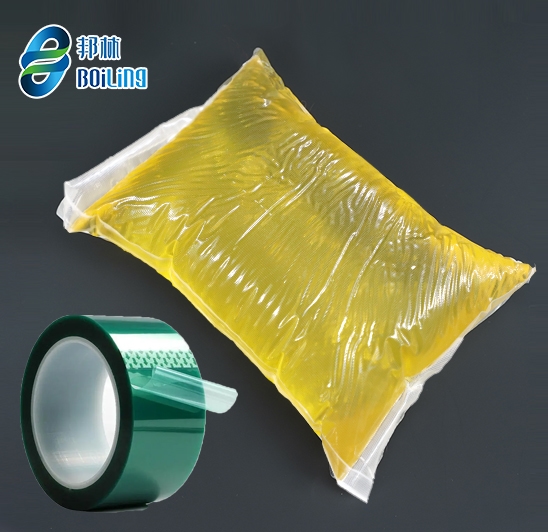
Even great systems are often plagued by operational issues when running at very high pace continuously.
Troubleshooting Common Production Issues
Stringing or Web Breaks During Coating
Excessive viscosity or lack of temperature control near the die can cause this problem.
Uneven Coating Thickness
Inconsistent pump pressure or clogged filters may cause an uneven coat. Regular maintenance will prevent this.
Oxidation or Gel Formation
Air exposure promotes oxidation, and a nitrogen blanketing system is an effective means to counteract this degradation mechanism.
Quality Control Practices for Continuous Operation Stability
Viscosity sensors in the production line can detect early changes of a material’s characteristics before any visible damage is done. The periodic calibration of all coating heads on site is crucial to achieve constant results for different production batches. Especially for the globally acting company’s narrow quality specifications this is essential.
How Does Hangzhou Boiling Adhesive Technology Co., Ltd. Support High-Speed Tape Manufacturers?
Hangzhou Boiling Adhesive Technology Co., Ltd. is a leading manufacturer of pressure-sensitive hot melt adhesives for tape manufacturers all over the world. The Company can design and manufacture the most suitable adhesive for its customers after knowing the substrates which are going to be coated with the adhesives and the production parameters. The Company’s technical team not only can design the suitable adhesives but also can send the technical staff to customers’ factories to audit the production processes and to troubleshoot the problems for the tape manufacturing lines which are running at the speeds exceeding 600m/min. The Company’s eco-friendly hot melt adhesives comply with the RoHS and REACH regulations, which makes them suitable for the sustainable production requirements of the export markets.
Sonuç
Choosing the right hot melt tape adhesive is a matter of finding the optimal balance between speed of application and adhesive properties, as well as heat stability and cost. The adhesives are put through their paces in tests, rather than simple assumptions. As production lines are increasingly designed to process materials at higher speeds, and with a greater emphasis on “green” products, the collaboration between manufacturers and suppliers of adhesives is becoming more and more important in order to achieve consistent quality. By monitoring the rheological behavior of the hot melt, it is possible to guarantee stable processing, even at very high throughputs. A data-based choice of adhesive not only increases reliability, but also offers long-term cost savings.
Sık Sorulan Sorular
1. What is the optimal temperature for applying hot melt tape adhesives on high-speed production lines?
The most common industrial grades of hot melt adhesives are designed to perform best at application temperatures between 160°C – 190°C, depending on the specific adhesive resin formulation and the type of substrate being bonded.
2. How do you prevent stringing during high-speed coating?
Stringing can be prevented by precise temperature control at the die head and by selecting stable rheology-based formulations.
3. How does substrate type affect hot melt tape adhesive performance?
Different substrates can significantly influence adhesion results. Materials such as corrugated cardboard, polyethylene films, kraft paper, and coated surfaces have different surface energies and absorption characteristics. Selecting a hot melt adhesive that matches the substrate helps achieve stronger bonding, better coating consistency, and improved production efficiency.
4. How can I test if the currently used adhesive is suitable for higher line speeds?
Perform rheological tests on samples under production-like conditions and check coating uniformity and peel strength.
5. How to extend the life of your equipment by using maintenance practices when working with hot melt adhesives?
Clean filters, pumps and dies regularly to prevent char from building up. Adding of antioxidants to your formula also helps to prevent contamination of your system over time.
 Danışma
 Whatsapp'ın
 Mesaj bırakın
 üst
üst