






جدول المحتويات
أخبار ذات صلة
Smart Label Trends 2026: How Adhesive Technology Supports Next-Generation Labels
In 2026, the key change for label converters is that more labels now carry a digital function that must survive alongside the physical bond. GS1 is moving retail toward broader 2D-barcode capability by the end of 2027, the EU Digital Product Passport Registry became operational on July 20, 2026, and NFC Release 15 expands certified operating volume for applicable devices up to 20 mm. For label converters, pressure-sensitive label manufacturers, procurement teams, and process engineers, adhesive technology should therefore be selected as part of the complete construction. Label edge lifting, creep deformation, wrinkling or dimensional distortion will interfere with barcode scanning, NFC/RFID data reading and full product traceability functions.
Which Smart Label Trends in 2026 Should Label Buyers Actually Plan For?
The most relevant trends are those that change construction requirements, qualification methods, or service life. Buyers do not need a different adhesive for every digital-label development; they need to identify which functions create new physical risks.
Why Do 2D Barcodes and Digital Product Passports Raise the Cost of Label Failure?
GS1’s Ambition 2027 calls for retail point-of-sale systems to process defined GS1-compliant 2D barcodes by the end of 2027. Current guidance covers formats such as QR Code with GS1 Digital Link and GS1 DataMatrix, together with requirements for barcode quality, placement, and data handling.
The EU has also moved Digital Product Passports toward implementation. Its Registry is now operational, while the first mandatory DPP deadline applies to certain battery categories on February 18, 2027.
If the label carries access to digital information, edge lift, wrinkling, abrasion, or detachment can become more than a cosmetic defect. Adhesive durability should match the required life of the data carrier, not merely the time needed to pass the packing line.
Why Does NFC Expansion Make Finished-Label Validation More Important?
NFC Release 15 extends the operating range for applicable compliant devices from about 5 mm to as much as 20 mm, reducing alignment sensitivity. NFC Release 15 certification specifications were officially approved and available for industry use starting May 2026.
That gives designers more flexibility, but RFID and NFC labels still contain functional inlays that can be affected by bending, layer movement, die-cutting stress, or poor placement. Converters should therefore test read performance after lamination, dispensing, application, conditioning, and handling—not only before converting.
How Does Adhesive Technology Affect RFID, NFC, QR, and DPP Label Performance?
Smart labels are multilayer systems. Face stock, inlay, adhesive, liner, package surface, coating method, and service environment interact, so adhesive technology must be evaluated within the finished construction.
Which Interfaces Should Be Checked in a Smart Label Construction?
Start by identifying every bond line and the final application surface. The supplied label-adhesive data identifies PE, PET, glass, metal, and cartons among relevant substrates for self-adhesive label applications.
These materials do not behave identically. Curved containers create additional edge stress. Refrigerated packaging can introduce low-temperature tack and condensation concerns. Durable labels may need more creep and aging resistance than short-life logistics labels.
A buyer should therefore provide the adhesive supplier with the actual face stock, liner, container material, surface treatment, curvature, and expected storage conditions rather than simply requesting “glue for smart labels.”
What Failure Modes Should Buyers Ask About?
A useful supplier discussion should distinguish between adhesive failure, cohesive failure, edge lift, adhesive ooze, liner-release problems, label curl, inlay damage, and code distortion.
Increasing initial tack will not correct every failure. A curled construction may result from dimensional imbalance between layers, while RFID performance problems can come from tag placement or surrounding materials rather than adhesive strength.
Ask the supplier to explain the probable failure mechanism and the parameter that should be changed. That produces a more useful purchasing decision than comparing one peel value across several products.
Which Adhesive Parameters Should Buyers Put Into a Smart Label Specification?
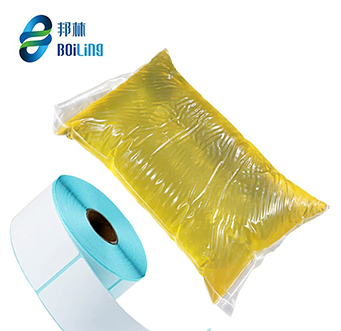
“Works for smart labels” is not a technical specification. Procurement needs measurable limits tied to the actual coating process, package surface, converting conditions, and service environment.
Which Technical Parameters Need a Defined Range?
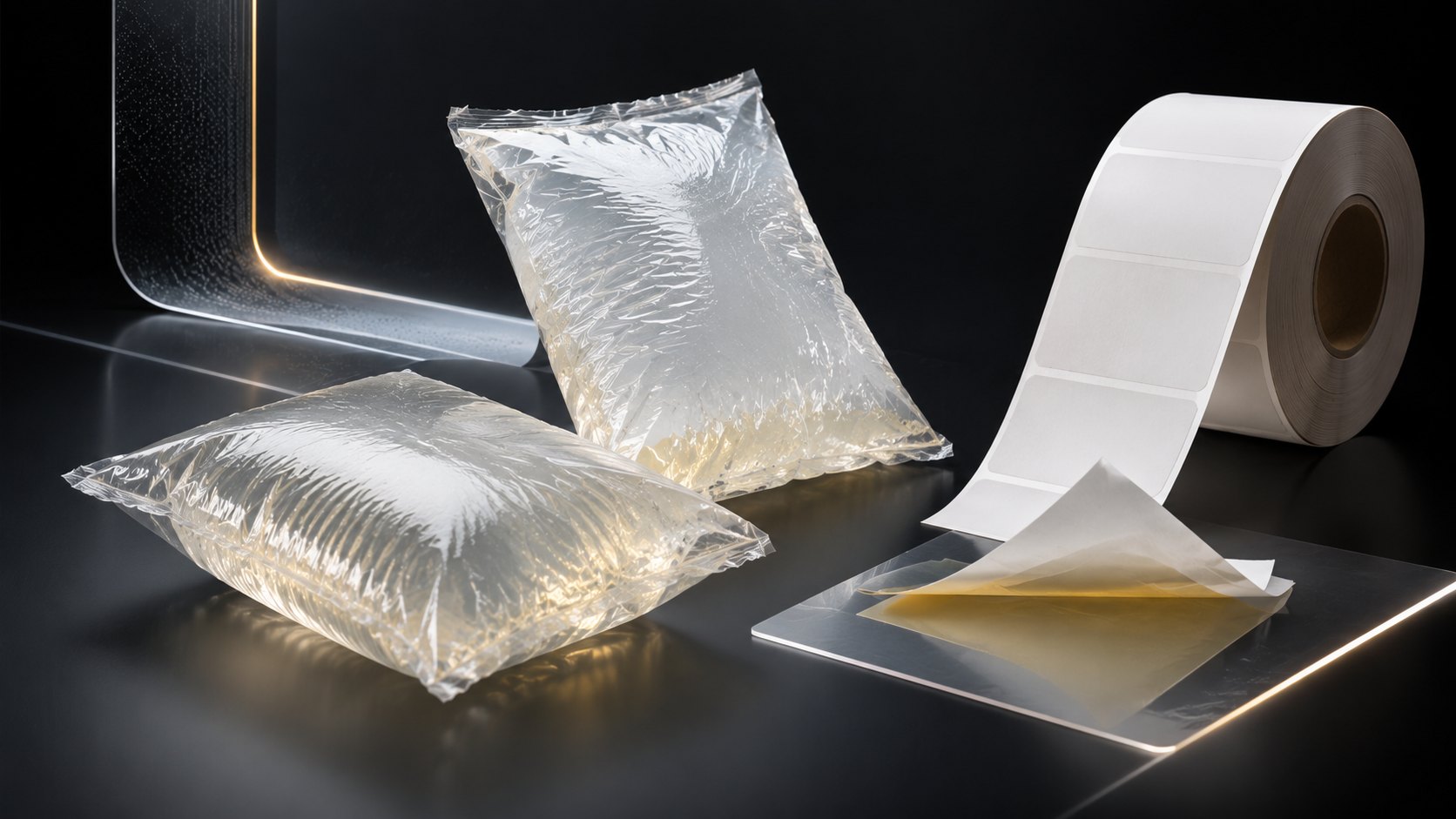
One label hot melt adhesive reference in the supplied materials provides the following product-specific values. They are useful as an example of what buyers should request, but they are not universal targets for every RFID, NFC, QR, or DPP construction.
| المعلمة | Reference Value | Test Standard | Why Buyers Check It |
|---|---|---|---|
| Base system | Thermoplastic elastomers with tackifying resins | — | Determines substrate wetting and stable pressure-sensitive performance |
| نقطة التخفيف | 90–110°C | ASTM E28 (Ring & Ball Method) | Helps assess heat response and creep risk |
| اللزوجة | 5,000–7,000 cps at 180°C | Brookfield Rotational Viscometer | Affects coating flow and equipment compatibility |
| Recommended operating temperature | 150–180°C | — | Influences wetting and coating stability |
Before approval, buyers should request the current TDS for the selected grade and confirm viscosity test conditions, storage requirements, shelf life, substrate recommendations, and acceptable parameter tolerances.
Which Performance Properties Matter Beyond Initial Tack?
Initial tack matters on high-speed application lines, but it should not be the only purchasing criterion. The supplied label-adhesive information also emphasizes wetting, stable adhesion, and low-temperature reliability.
Qualification should include peel adhesion, shear or holding performance, edge lift, liner release, coating uniformity, blocking, die-cut cleanliness, and environmental aging.
For smart labels, add one more acceptance criterion: digital function after conditioning. QR codes should remain scannable, while RFID or NFC constructions should remain readable after the environmental and mechanical tests that represent the real application.
Peel adhesion test: ASTM D3330/D3330M
Shear holding power (anti-creep): ASTM D3654/D3654M
Wetting tension of plastic substrates: ASTM D2578-23
How Should Converters Qualify Smart Label Adhesive Before Mass Production?
Qualification should reproduce the final construction and production conditions closely enough to expose real failure mechanisms. A generic laboratory substrate can help compare candidates, but it should not be the final approval step.
What Should Be Included in the Qualification Checklist?
-
Confirm face stock, inlay type, liner, label dimensions, and adhesive coat weight.
-
Identify package substrate, surface treatment, curvature, and cleanliness.
-
Record adhesive viscosity, softening point, and application temperature.
-
Run the construction at the intended coating or dispensing speed.
-
Check liner release, die-cut quality, edge lift, peel, and holding performance.
-
Condition samples at relevant temperature and humidity ranges.
-
Repeat QR scanning or RFID/NFC read tests after conditioning and handling.
-
Record the failure mode rather than only the final test number.
This checklist gives purchasing, production, and QA teams the same basis for comparing candidate adhesives.
How Should a Failed Trial Be Investigated?
If the label lifts, determine where separation occurred. Poor wetting, insufficient application pressure, contamination, construction stiffness, or adhesive creep can create similar visible symptoms.
If digital performance changes, inspect inlay damage, antenna position, nearby materials, and construction movement before changing the adhesive.
The objective is to establish a reproducible process window. Final approval should define accepted materials, adhesive parameters, production settings, environmental exposure, and digital-function criteria.
What Should Procurement Ask an Adhesive Supplier Before Approving a Smart Label Project?
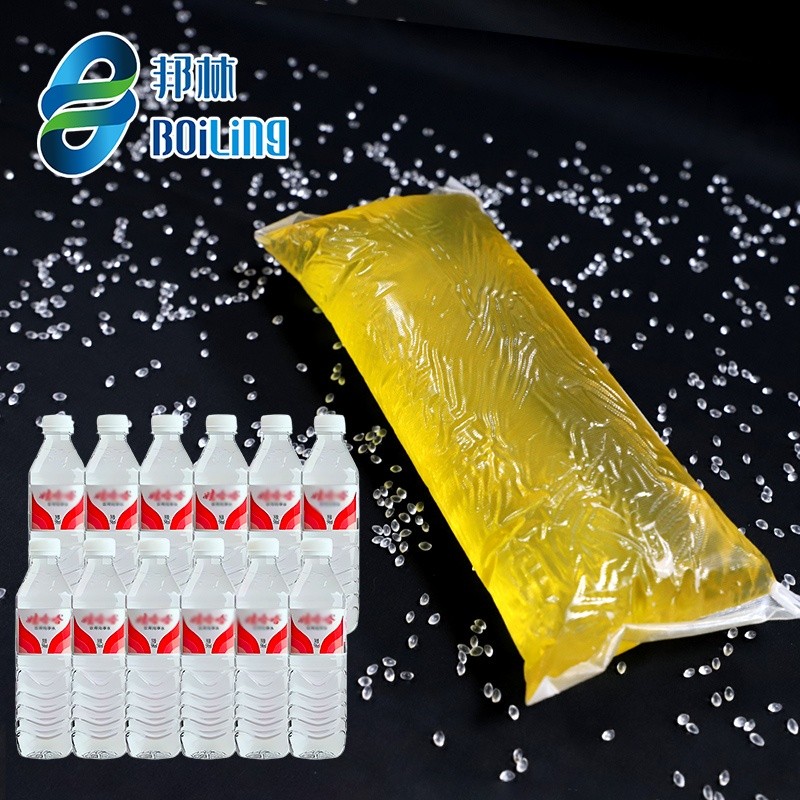
The supplier should be able to connect adhesive properties to the converter’s process and finished application. Vague general descriptions like “works for all labels” provide procurement teams no quantifiable basis to compare adhesive performance between suppliers.
Which Technical Questions Should Be Asked Before Sampling?
Ask which substrates have been evaluated, what viscosity range suits the coating equipment, how softening point relates to the expected service temperature, and whether the formulation can be adjusted for low-temperature tack, creep resistance, or difficult-to-wet surfaces.
Also provide real project information whenever possible:
-
Face stock and liner
-
RFID/NFC inlay information
-
Package substrate
-
Target coat weight
-
Coating or dispensing method
-
Production line speed
-
Storage and service temperature
-
Expected label lifetime
The more closely a sample reflects the finished construction, the more useful the trial will be.
What Should Be Agreed Before a Bulk Purchase?
Define sample approval criteria, batch documentation, parameter tolerances, packaging, storage, and how formulation or raw-material changes will be communicated.
Retain approved samples and production settings as a reference. If the face stock, inlay, liner, container, or coating process later changes, repeat the relevant qualification steps.
The next action should be a controlled converter trial. Once the construction passes mechanical, environmental, and digital-function checks, procurement can approve the adhesive against a documented specification.
Professional Technical Support from Hangzhou Boiling Adhesive Technology Co., Ltd.
Boiling Adhesive specializes in developing customized hot melt pressure-sensitive adhesives for various smart label applications, including QR, RFID, NFC and EU DPP compliant labels. Our HMPSA formulas adapt to high-speed automatic coating lines and multiple substrates: PE, PP, PET, glass, metal and corrugated carton.
We provide one-stop technical services including free sample matching, targeted formula adjustment, full performance testing and production line pilot verification. For smart label manufacturers developing new projects, our technical team will formulate targeted trial process windows according to your actual face stock, NFC/RFID inlay, liner, production equipment and service environment requirements, simplifying your internal material qualification work.
استنتاج
Smart label trends in 2026 make adhesive technology part of functional label reliability, not simply a converting material choice. Buyers should specify adhesive by substrate, rheology, tack, peel, holding power, temperature exposure, and converting behavior, then confirm digital performance after aging and handling. The practical next step is a controlled trial using the real face stock, inlay, liner, package surface, and production settings, with measurable mechanical and read-performance criteria documented before bulk approval.
الأسئلة الشائعة
1. Does every RFID or NFC label need a special smart label adhesive?
No. The adhesive must match the face stock, inlay, liner, package substrate, converting process, and service environment. Approval should combine adhesion testing with RFID or NFC read checks after conditioning.
2. What adhesive properties matter most for QR code labels?
Initial tack, peel adhesion, holding power, edge-lift resistance, and dimensional stability are important. The finished label must remain flat and attached so the QR code stays visually intact and scannable.
3. Can hot melt adhesive be used for Digital Product Passport labels?
Yes, depending on construction and service-life requirements. Buyers should verify substrate compatibility, aging, edge stability, and data-carrier accessibility against the product-specific DPP rules that apply to the finished product.
4. How should adhesive technology be tested on PE or PP smart-label applications?
Use the actual treated substrate and complete label construction. Test coating behavior, tack, peel, holding power, edge lift, and environmental aging, then repeat QR, RFID, or NFC functional checks.
What material information should procurement send adhesive suppliers before requesting smart label samples?
Provide physical face stock samples, inlay type, release liner material, packaging substrate, label dimensions, coating process, production line speed, target coat weight, storage temperature range, required label service life and digital function acceptance standards to obtain production-matched sample formulas.
 استشارة
 واتساب
 اترك رسالة
 أعلى
أعلى