






How to Select Pressure-Sensitive Hot Melt Adhesive for Bottle Labels
Pressure-sensitive hot melt adhesive can support fast bottle-label production, but only when the adhesive, label construction, container, coating process, and service conditions are evaluated together. A broad claim such as “high tack” does not tell a buyer whether a label will wet a curved PET bottle, resist edge lift after refrigeration, or run cleanly through the selected equipment. Start with the actual labeling architecture, then build a controlled shortlist around materials, process settings, and measurable acceptance criteria.
Which Labeling Architecture Will Use the Pressure-Sensitive Hot Melt Adhesive?
Define where the adhesive is applied and what the labeling machine receives before discussing product grades.
Pre-Coated Pressure-Sensitive Labels Versus In-Line Adhesive Application
A pre-coated pressure-sensitive label arrives with adhesive already on the construction, normally protected by a release liner until application. In-line adhesive application places adhesive during the labeling or coating process. These routes assign heating, coating, release, cleaning, and changeover work to different equipment. Confirm the route with the label converter and the bottle-line team so the adhesive recommendation addresses the real process.
Where Hot Melt Coating Equipment Enters the Process
Hot melt coating material is heated, delivered to the coating head in a molten state, applied at a controlled weight, and cooled. The line therefore needs compatible melting, heated delivery, and coating equipment. Pressure-sensitive hot melts may be sprayed, coated, or roll coated. Equipment capability must be checked against the selected grade rather than assumed from the adhesive family.
Why Water-Based Adhesive Is Only a Route Check Here
Water-based systems use a liquid phase in which water is significant and need suitable metering and drying. That difference matters when a plant is comparing coating architectures. This article focuses on pressure-sensitive hot melt selection, so a water-based route should remain only a benchmark for equipment fit, drying capacity, and changeover planning, not the center of the product evaluation.
Which Label and Container Details Control Adhesive Selection?
Screen the complete label-to-container interface because the product name alone cannot predict wetting or long-term appearance.
Label Facestock, Backing, Coating, and Release Construction
Record whether the facestock is paper or film, its stiffness, surface coating, printing layer, backing, and release system. Thin films may reveal coating variation, while stiff labels can place more stress on curved surfaces. Ask the converter for the actual construction and provide production samples. A pressure-sensitive hot melt must be evaluated as part of that full label structure.
PET, PE, Glass, Metal, and Carton Surfaces
Label hot melt adhesive may be screened for flat or curved PE and PET bottles, glass, metal, and cartons. This is a useful starting range, not universal approval. Resin grade, recycled content, treatment, mold release, dust, moisture, and other surface conditions can change wetting. Test the exact production container rather than a generic laboratory panel.
Curvature, Squeeze Stress, and Edge-Lift Risk
Small bottle diameters pull against the label, and squeezable containers repeatedly flex the bond line. Define the visible failure mode before testing: edge lift, flagging, sliding, wrinkling, adhesive transfer, or facestock damage. The shortlist should favor candidates that maintain placement and appearance through the agreed geometry and handling cycle.
Which Pressure-Sensitive Hot Melt Properties Matter on the Line?
Translate product data into process consequences instead of choosing by one headline property.
Initial Tack, Wetting, and Holding Behavior
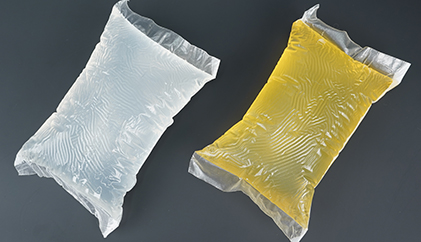
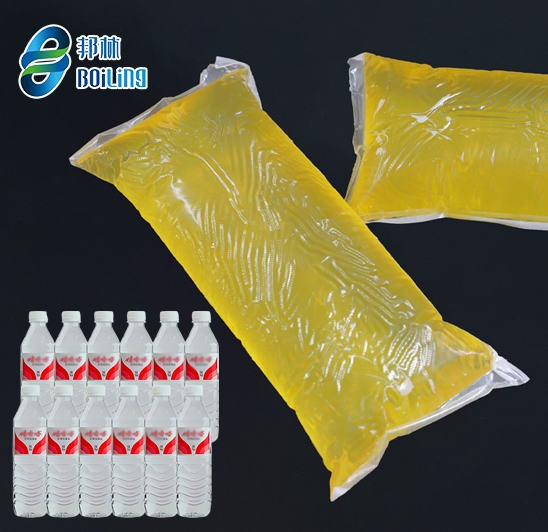
The water bottle label hot melt adhesive material describes the label series around high initial adhesion, wetting on different material surfaces, and low-temperature reliability for cold-chain label bonding. Buyers still need the current product data sheet and conditioned testing. Do not turn a series-level direction into a universal temperature, peel, shear, or holding-time guarantee.
Viscosity, Temperature, and Coating-Weight Control
Viscosity affects pumping, pattern formation, penetration, and coating consistency. The source material identifies roller or blade speed, nozzle size, and adhesive viscosity as coating-weight inputs. Record the melter, hose, head, temperature points, line speed, and target coat weight with every trial result. Use the current grade-specific data sheet to establish the starting window.
Set, Cooling, Stops, and Restart Behavior
Cooling and set behavior must support label handling at the planned production rate. Evaluate normal running as well as short stops, longer interruptions, and restarts. Watch for stringing, uneven coating, buildup, placement drift, and visible contamination. A candidate that looks acceptable during steady running may still create rejects when the line changes speed or resumes after a stop.
How Should Cold, Condensation, and Storage Conditions Be Tested?
Use a service-condition sequence that represents the labeled package from application through distribution and use.
Define the Actual Exposure Sequence
List bottle temperature at application, filling conditions, condensation, refrigeration, humidity, transport, warm storage, and handling. The order matters. A dry bottle labeled at room temperature and later chilled presents a different challenge from a damp or cold surface at application. Avoid a generic “cold-resistant” requirement without a defined sequence.
Set Observable Acceptance Criteria
Agree on initial placement, edge condition, sliding, wrinkles, adhesive transfer, label damage, and any peel or hold checks. Specify conditioning duration, inspection intervals, sample count, and reject limit. Include untreated controls or the current production adhesive where useful so the team can interpret the result in a practical baseline.
Use Representative Filled or Simulated Bottles
Bottle stiffness, curvature, internal pressure, and surface temperature may differ between empty samples and production packages. Use filled or representative bottles when those conditions affect the bond. Repeat the test across the container and label lots needed by the buyer’s quality plan, then classify whether failure occurs at an interface, within the adhesive, or in the label.
What Should a Controlled Pressure-Sensitive Hot Melt Trial Record?
Build evidence in stages so laboratory screening, converter trials, and bottle-line trials answer different questions.
Prepare a Complete Application Brief
Provide the label construction, container material and grade, geometry, coating or application method, equipment, target speed, process temperatures, target coat weight, storage exposure, current failure, and acceptance criteria. This prevents a supplier from recommending against an incomplete description and gives production, quality, purchasing, and the converter one shared target.
Screen Actual Labels and Containers
Apply candidates using proposed settings and control dwell, pressure, and conditioning. Record coat weight and all relevant settings with each sample. Inspect wetting, placement, edge behavior, appearance, and failure mode before and after the agreed aging sequence. Remove candidates that need an impractical window before committing line time.
Confirm Line Stability and Supplier Controls
For the strongest candidates, document warm-up, stabilization, steady running, stops, restarts, changeover, cleaning, waste, and reject output. Confirm grade identity, batch documents, change-notification practice, complaint-sample handling, and technical response. Final approval should name both the adhesive and the validated operating window.
How Can BoiLing Support a Pressure-Sensitive Hot Melt Label Trial?
BoiLing develops hot melt adhesive solutions for label production, including pressure-sensitive applications. Its source material lists automated label production and surfaces such as PE and PET bottles, glass, metal, and cartons. The team can discuss formulation adjustments after the application and test requirements are defined, and testing samples can be provided after performance and test specifications are confirmed. Send the label construction, container, surface condition, equipment, operating window, service exposure, known failure mode, and measurable acceptance criteria. BoiLing can then discuss a matching product data sheet and sample plan while keeping final approval tied to the buyer’s controlled trial and documented quality process.
निष्कर्ष
Select pressure-sensitive hot melt adhesive as part of a complete label system. Confirm the labeling architecture, screen the actual facestock and container, and connect tack, wetting, viscosity, coating weight, cooling, and restart behavior to measurable production risks. Then test representative packages through the real storage sequence and document the final line window. This approach keeps the decision focused on hot melt performance while giving water-based technology only the limited route comparison it requires.
अक्सर पूछे जाने वाले प्रश्न
Is Pressure-Sensitive Hot Melt Adhesive Suitable for PET and PE Bottles?
It may be suitable, but resin grade, treatment, recycled content, bottle geometry, label construction, and service exposure can change the result. Test the proposed grade on production bottles before approval.
What Causes Bottle-Label Edge Lift After Refrigeration?
Possible contributors include curvature stress, poor wetting, contamination, an unsuitable label construction, or an unverified temperature and condensation sequence. Reproduce the actual package conditions and document the failure interface.
Which Data Should a Label Adhesive Supplier Receive?
Provide facestock and liner details, container grade, geometry, equipment, application method, temperatures, line speed, coat-weight target, storage exposure, current failure mode, and measurable acceptance criteria.
How Should Coating Weight Be Controlled During a Hot Melt Trial?
Record the target and measured coating weight with roller or blade speed, nozzle size, adhesive viscosity, temperatures, and line speed. Change one controlled input at a time.
When Should a Buyer Request a Customized Label Adhesive Sample?
Request one when standard grades miss a material, geometry, process, cold-service, appearance, or documented acceptance requirement. Confirm the performance and test specification before sample preparation.
 परामर्श
 व्हाट्सएप
 संदेश छोड़ें
 शीर्ष
शीर्ष