







Why Recycled PE Courier Bags Are Hard to Seal—and How the Right Hot Melt Glue Solves It
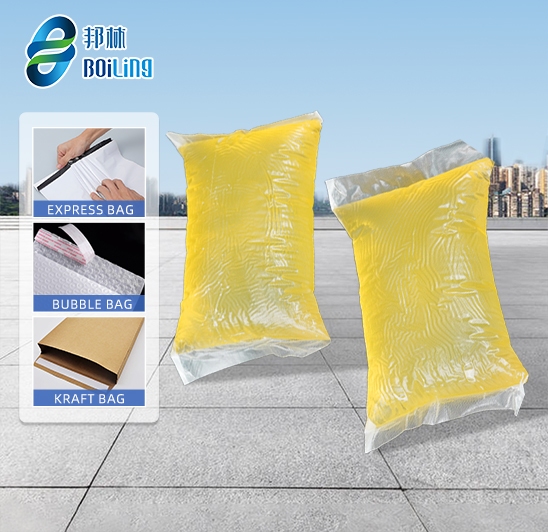
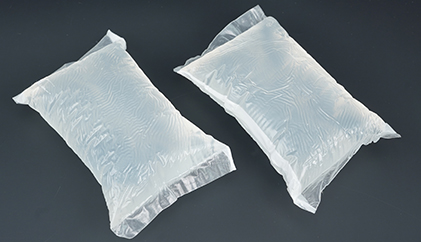
While Recycled polyethylene (PE) courier bags are becoming more and more popular in view of companies changing to environmentally friendly packaging, the simple task of sealing these bags is proving to be extremely difficult for manufacturers. While traditional hot melt adhesives are generally used for sealing courier bags made of PE, they have difficulty bonding with recycled polymers due to differences in surface chemistry. Many manufacturers experience problems with seals not opening in the correct place, adhesion not being strong enough and bags opening prematurely during transit. In this article we will explain the problems encountered with sealing Recycled PE courier bags and how Express Bag hot melt glue can be used to produce strong and consistent seals whilst maintaining efficiency.
Why Are Recycled PE Courier Bags Difficult to Seal?
To understand the adhesive issues that arise when trying to seal recycled PE substrates, it is first important to understand the issues associated with the substrates themselves prior to adhesive application.
Material Composition and Surface Energy Challenges
As already mentioned PE waste is a mixture of different polymer grades, fillers etc. even traces of other plastics can be found in waste streams. The surface energy of such materials is very low. Therefore a uniform coating of the material with hot melt glue is not possible. A complete molecular embedding of the material in the glue film does not take place. Data of the European Plastics Converters Association show that the adhesion of recycled polyolefins is reduced by up to 25 % compared to virgin materials. In sealing processes using the same parameters the adhesion of films made of recycled materials is therefore not sufficient.
The Impact of Additives and Contaminants
Recycled films can be formulated with additives such as slip agents and anti-blocking agents which help to reduce friction but can also affect the compatibility of adhesives. Printing inks and overprints from previous uses of the film can also create problems with adhesion by forming small barriers to adhesion between layers. The melt flow index (MFI) of recycled materials can vary from batch to batch and as this parameter cannot easily be measured on the production floor of an automated packaging line, this can lead to inconsistent results, with perfect seals being produced on some occasions and failures on others.
Production Environment Variables
Even with consistent materials, environmental conditions can have a huge effect. For example, temperature variations during sealing can greatly affect the viscosity and open time of adhesives. On high volume production using automatic lines running at high speed, the operator has to ensure that the adhesive has the correct tack for sealing. If the adhesive is not correctly controlled then the seal can potentially warp or peel in service. The biggest problem is getting the correct balance between line speed and adhesive curing time. If this is not achieved then rework is likely to occur.
How Does Hot Melt Adhesive Chemistry Influence Bonding Performance?
The composition of hot melt adhesive affects how well it can interact with surfaces of low energy from recycled material.
The Role of Base in Adhesive Formulation
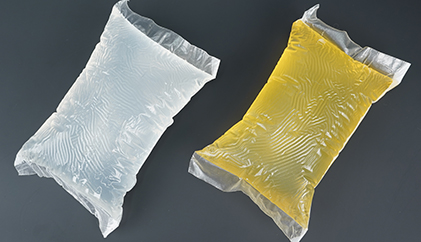
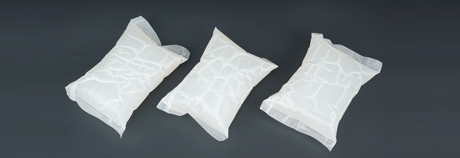
Thermoplastic rubber is one of the most common base materials used for express bag hot melt glues. The finished glue blocks are flexible and durable once they have cooled. This type of glue is able to withstand small irregularities in the substrates to which they are adhered without developing cracks or delaminating while the bags are in distribution.
Tackifiers and Additives That Improve Adhesion on Recycled Surfaces
Tackifiers such as modified hydrocarbon resins, improve initial tack to overcome contamination and low surface energy such as with recycled PE. In addition to tackifiers, antioxidants are commonly added to ensure that formulation performs at high processing temperatures. For long running times, high machine availability is critical.
Viscosity, Open Time, and Setting Speed Considerations
A well-balanced viscosity ensures that the adhesive doesn’t overpenetrate thin courier bag films while still forming a continuous layer. Adjusted open time provides flexibility across varying line speeds so operators can maintain consistent seals without deformation or stringing issues.
What Makes Express Bag Hot Melt Glue Suitable for Recycled PE Applications?
Some new specialized formulations have been developed for Express Packaging that are formulated to work with a majority of recycled substrates.
Tailored Formulation for Recycled Substrates
Express bag hot melt glue has optimized polarity for recycled PE materials, far superior to generic adhesives.
Consistent Sealing in Automated Packaging Lines
E-commerce fulfillment centers can process thousands of parcels per hour, which means consistency is critical. Express bag adhesives resist deterioration in temperature fluctuations encountered in storage and transit, and are able to maintain seal integrity in very hot warehouse environments as well as in cold transit environments.
Cost Efficiency and Long-Term ROI Benefits
From an operational standpoint, fewer defective seals mean less rework and less waste. This is particularly true for plants that use specialized sealant formulations. Not only do these products result in less downtime for packaging lines, but they also enable plants to use less material in the long run. Sealants with longer shelf life also have a positive impact on the way that materials are stored in inventory for large packaging operations.
How Can Manufacturers Optimize Sealing Process Parameters?
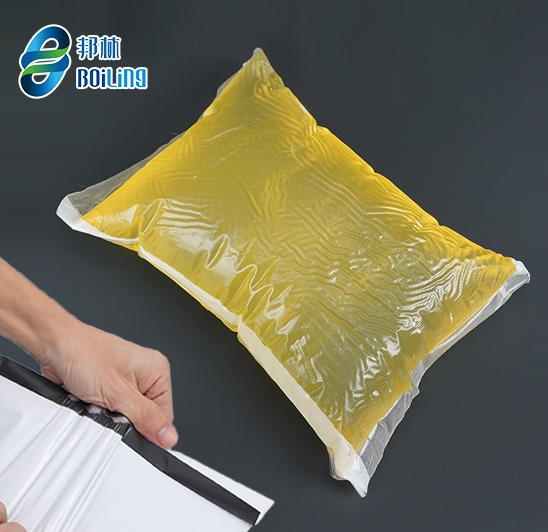
The best adhesive can fail if process variables are not controlled.
Temperature and Pressure Calibration Techniques
Maintain the nozzle temperature at 165 – 175 degree Celsius to prevent the adhesive from drying out too soon and cause stringing or incomplete bond. Uniform force distribution on the seam is critical to achieve a uniform adhesive thickness, especially when using very thin courier films that can easily wrinkle under uneven force.
Equipment Maintenance and Glue Application Tips
Maintaining a regular schedule of routine maintenance can also help to sustain high levels of quality. For example, regularly cleaning the heads of applicators will help to prevent the build up of carbon, which can stop the glue from flowing. A simple change to using precision nozzles can help to cut overapplication by around 10% – this alone can save a huge amount of adhesive every year and still deliver high quality seals.
Quality Control Testing for Reliable Seals
Simple tests like peel tests or burst pressure tests verify the bond strength of production articles before they are dispatched. By tracking the adhesive consumption on each shift it is possible to immediately identify any increase in efficiency as well as any decrease in the process and thus take appropriate measures in time.
Who Is Hangzhou Boiling Adhesive Technology Co., Ltd.?
We, Hangzhou Boiling Adhesive Technology Co., Ltd., are a professional adhesive manufacturer based in Zhejiang Province, China. We have over twenty years experience in producing high quality hot melt adhesive for various fields such as packaging, labeling, woodworking, hygiene products etc. Our mission is to develop environment-friendly packaging hot melt adhesives to help packing manufacturers deal with the recycling problems in modern packaging industry. We provide technical consultation for express bag sealing line, customize hot melt adhesive formula according to different substrates, and solve production problem on customer’s site.
निष्कर्ष
While offering considerable sustainability benefits the recycled PE courier bags cause considerable sealing problems due to their variable composition and completely different surface energy compared to virgin materials. Special hot melt adhesives for express bag sealing, developed for such applications on automated production lines, offer far greater adhesion and better reproducibility than corresponding virgin materials. By adjusting temperature, by regular servicing of the plant and by checking quality the number of defects can be drastically reduced and the throughput increased. In the meantime, with the increasing use of materials in circular economy, manufacturers of packaging materials and manufacturers of adhesives are working together in order to achieve sealed articles of adequate quality without compromising ecological targets.
अक्सर पूछे जाने वाले प्रश्न
1. Why does standard hot glue fail to stick to recycled PE courier bags?
Standard hot glue formulas do not have sufficient polarity to align with the new polymer, therefore do not wet properly and fail to bond reliably under stress.
2. What is the typical temperature range for applying express bag hot melt adhesives?
The typical temperature for express bag hot melt adhesives is 150 °C–180 °C. This temperature must be maintained constant to guarantee the appropriate viscosity during application.
3. Can switching adhesives improve ROI significantly?
Yes, reducing defective seals by as little as 5% can result in annual savings in terms of reduced waste and returns due to packaging failure to perform seal correctly.
4. How often should you maintain the sealing equipment when working with hot melt adhesive?
Monthly check-ups are recommended. Cleaning the nozzles every two weeks with the appropriate cleaning liquid prevents clogging of the applicators by charred residues.
5. Are there any eco-friendly or biodegradable types of express bag glues available on the market?
Yes, there are several suppliers that offer bio-based polyolefin formulations that have similar performance characteristics to conventional adhesives but with a reduced carbon footprint.
 परामर्श
 व्हाट्सएप
 संदेश छोड़ें
 शीर्ष
शीर्ष