








Tabel isi
Berita terkait
How to Choose Hot Melt Adhesive for Aluminum Foil Tape: Key Factors for Better Bonding Performance
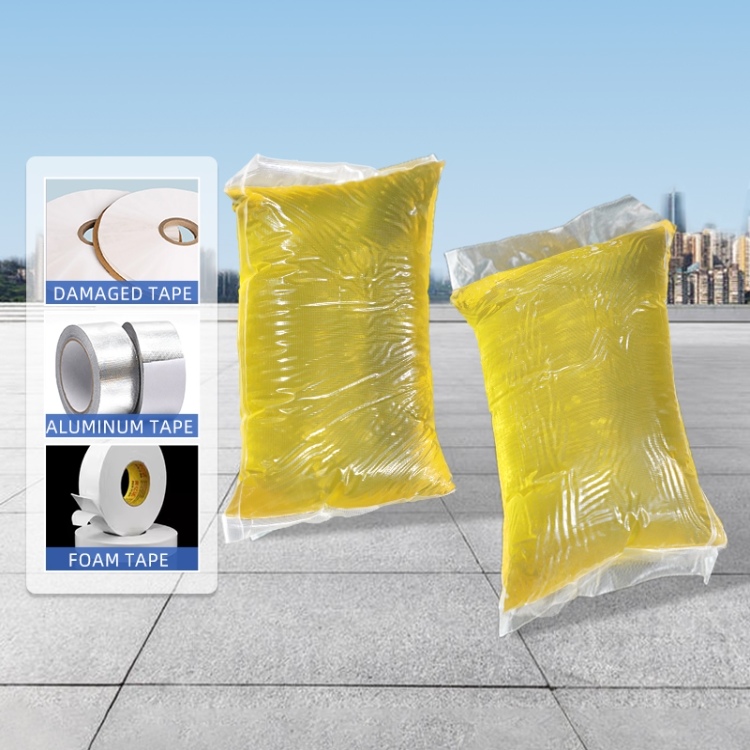
A common challenge for aluminum foil tape manufacturers is that an adhesive may pass initial lab approval yet fail during mass production. While adhesive samples may deliver adequate bonding strength in lab tests, finished tapes can suffer edge adhesion loss after several production days or delamination after storage. In such cases, many manufacturers blame the adhesive, but it can be caused by a new foil supplier, new liner, a change in the coating specifications, or the change in application conditions. For tape converters and purchasing teams, selecting hot melt adhesive is not only about comparing technical data. It is about understanding how the adhesive performs together with the complete tape structure and production process.
The Adhesive Is Not Always the First Problem When Tape Performance Changes
When tape performance changes unexpectedly, replacing the adhesive is often the first idea considered. However, the adhesive is only one part of the complete system.
Material Changes Can Affect Bonding Without Changing the Adhesive
One of the most common situations occurs when a manufacturer changes a raw material supplier.
For example, a converter may purchase aluminum foil from a new source because of supply availability or cost considerations. The specification may look similar, but differences in surface treatment, cleanliness, or processing conditions can affect how the adhesive contacts the foil.
The adhesive formula remains the same, but the bonding result changes.
This situation is also common when manufacturers adjust the liner system. A different release liner can influence converting behavior during rewinding, slitting, and storage. If the release force is not suitable for the adhesive system, operators may notice processing difficulties even though the adhesive itself has not changed.
Before changing an adhesive, manufacturers should first review whether any other part of the tape structure has changed.
Application Conditions Should Be Defined Before Selection
Another reason for adhesive selection problems is that the final application requirement is not clearly defined at the beginning.
Aluminum foil tape can be used in different industrial situations. Some applications require stable performance under temperature changes, while others focus more on long-term holding ability or surface compatibility.
-
A supplier recommendation becomes more accurate when the manufacturer provides information about:the surface where the tape will be applied;
-
expected temperature range;
-
exposure conditions;
-
required holding time;
production requirements.Without this information, adhesive selection is often based on general assumptions rather than the actual project requirement.
Why Production Trial Results Matter More Than Laboratory Data
Laboratory testing helps with material comparison, yet it cannot fully replicate real‑world continuous production conditions.
A Sample Test Cannot Show Every Production Issue
A laboratory test usually evaluates performance under controlled conditions. A production line involves more variables, including coating speed, equipment settings, material variation, and long running time.
For example, an adhesive sample may show good initial bonding during a short test. However, after several hours of continuous coating, the manufacturer may discover unstable coating weight or differences between the first and last production rolls.
These issues are difficult to predict from a single test value.
Production trials provide a better understanding of whether the adhesive can maintain stable performance during actual manufacturing.
What Manufacturers Should Observe During Trial Production
During a production trial, manufacturers usually focus on practical results rather than only laboratory numbers.
-
Important observations include:whether the adhesive coating remains uniform;
-
whether the production line runs continuously without adjustment;
-
whether finished tape performance remains consistent after storage;
whether the process can be repeated in future production.The purpose of a trial is not only to approve a material. It is to confirm that the entire manufacturing process works together.
What Buyers Should Check Before Requesting Hot Melt Adhesive Samples
Many unnecessary testing cycles happen because the initial technical information is incomplete.
A supplier cannot fully evaluate an adhesive requirement if the only information provided is the tape name or application category.
The Initial Inquiry Should Include Real Production Information
Before contacting an adhesive supplier, buyers should prepare details about the actual product structure and manufacturing conditions.
-
Useful information includes:aluminum foil type and thickness;
-
backing structure;
-
liner information;
-
coating method;
-
production speed;
-
final application surface;
service environment.Providing actual samples is also valuable because adhesive behavior is closely related to surface characteristics. A material that looks similar on paper may behave differently during coating and bonding.
Technical Data Sheets Are Only One Part of Supplier Evaluation
Technical documents provide useful information, but they should not be the only basis for approval.
A supplier may provide favorable lab data, yet real‑world performance depends on how the adhesive performs under the customer’s actual production conditions.
For this reason, buyers should also evaluate whether the supplier can support sample adjustment, testing, and production verification during the development process.
How Manufacturers Can Reduce Repeated Adhesive Testing
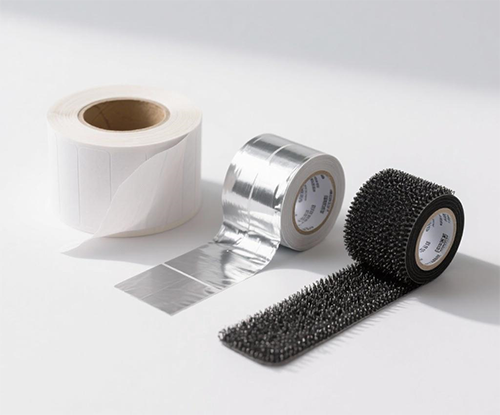
Repeated trials increase development time and create additional production costs. A more structured evaluation process can help manufacturers identify suitable adhesive solutions faster.
Check the Cause Before Changing the Material
When a tape fails during testing, changing the adhesive immediately may not solve the actual problem.
Manufacturers should first identify where the failure occurs.
If the adhesive fails to bond properly to the foil surface, the root cause may lie in material compatibility or foil surface conditions. If adhesive stays adhered to the foil but the tape loses holding power, the cohesive strength of the adhesive system should be reviewed. If performance varies across batches, production settings or raw‑material inconsistencies are likely to blame.
A clear failure analysis helps manufacturers make targeted adjustments instead of repeating the same trial process.
Keep Testing Conditions Consistent
Another common reason for repeated testing is changing multiple factors at the same time.
For instance, if a manufacturer modifies foil, release liner and adhesive all at once, it becomes difficult to pinpoint which factor drives performance changes.
A better approach is to control the variables during testing and record the production conditions carefully. This creates useful information for future adjustments and helps shorten the qualification process.
Working With a Supplier During Adhesive Development
For customized tape projects, adhesive selection is usually not completed through one sample approval. It often requires communication between the converter and supplier during testing and production verification.
Professional Technical Support from Hangzhou Boiling Adhesive Technology Co., Ltd.
Hangzhou Boiling Adhesive Technology Co., Ltd. develops customized hot‑melt pressure‑sensitive adhesive solutions for tape manufacturers. We support targeted formula tuning, performance testing and production‑line trial validation for various backing materials, release liners and coating processes before mass‑production launch. During project development, customers may submit real‑material samples, production parameters and end‑use requirements. Our technical team assists with formula adjustment, performance evaluation and trial‑run validation to help customers lock in stable production conditions for commercial manufacturing.
Kesimpulan
Choosing hot melt adhesive for aluminum foil tape requires more than selecting a material with strong bonding performance. The final result depends on the relationship between adhesive characteristics, tape construction, coating conditions, and application requirements. By checking material compatibility, using actual production trials, and maintaining technical communication during development, manufacturers can reduce repeated testing and establish a more stable production process.
Pertanyaan FAQ
1. We changed our aluminum foil supplier but kept the same tape design. Do we need to test again?
Yes. Different foil suppliers may have differences in surface treatment or processing conditions that influence adhesive performance. A small validation test can help confirm compatibility before full production.
2. Why did the adhesive pass sample testing but fail after mass production started?
Because production introduces additional variables such as coating speed, equipment conditions, material variation, and storage effects. A sample test cannot represent every production situation.
3. Should buyers choose the adhesive with the highest bonding strength?
Not always. Bonding strength is only one factor. Coating stability, compatibility, holding performance, and application conditions also affect the final tape quality.
4. What information should be provided when requesting hot melt adhesive samples?
Manufacturers should provide tape structure, foil information, liner details, coating process, production conditions, application environment, and performance requirements.
5. How can manufacturers reduce the time needed for adhesive qualification?
Using actual materials, defining requirements clearly, recording trial conditions, and communicating test results with the supplier can help reduce unnecessary testing cycles.
 Konsultasi
 Aplikasi Whatsapp
 Tinggalkan Pesan
 atas
atas