








Hot Melt Packaging Tape Adhesive for Recycled Cartons: A Converter’s Selection Guide
Recycled corrugate makes packaging tape selection less predictable. Two cartons with the same flute and dimensions can present different liner fibers, dust levels, coatings, print coverage, and recycled content. A hot melt packaging tape that closes one lot cleanly may lift early or lose hold on another.
This guide gives converters a route from carton mapping to laboratory screening and production approval. It focuses the decision on substrate variation and measurable tape performance rather than a single “high tack” claim.
Why Does Recycled Corrugate Change the Adhesive Selection Problem?
Start by identifying the surface and closure variables that can change contact from lot to lot.
Short Fibers, Dust, and Variable Surface Treatments
Recycled linerboard can expose shorter fibers, loose surface particles, uneven porosity, and variable coatings. These conditions change how quickly an adhesive wets the surface and how much stable contact develops under the available application pressure. Dust may become the weakest layer: the adhesive bonds to particles that are only loosely attached to the carton.
Record recycled content when known, but do not use that percentage as a substitute for testing. Print varnish, wax, sizing, recycled-fiber blend, humidity, and storage history may matter as much as the headline percentage.
Carton Geometry and Closure Stress
A flat coupon does not reproduce a filled box. Overfilled flaps, underfilled cartons, poor scoring, flap memory, bulging contents, and tape applied across an uneven center seam can keep a constant opening force on the bond. Even tape that achieves good initial contact may lift as the backing relaxes or box flaps spring apart.
Include carton dimensions, board grade, fill condition, tape width, seam overlap, application pressure, and whether the case is sealed manually or automatically.
Which Hot Melt Packaging Tape Properties Should a Converter Prioritize?
Translate each adhesive property into a finished-tape risk and controlled test condition.
Initial Tack and Surface Wet-Out
Initial tack describes the tape’s ability to establish contact quickly under limited pressure and dwell time. On a rough recycled surface, useful tack must be paired with enough flow to reach the available fiber peaks and valleys. Excessive softness, however, may create blocking, adhesive transfer, or poor roll stability.
Peel Adhesion and Fiber Tear
Peel testing shows the force required to remove tape at a defined angle and rate. ASTM D3330 covers peel adhesion measurements for pressure-sensitive tapes and also warns that backing and adhesive variation affect the response. For recycled cartons, test both a standard reference surface and the buyer’s fiberboard. Record whether failure is adhesive release, cohesive split, backing stretch, or fiber tear.
High fiber-tear results can simply indicate good adhesion to low-strength linerboard and do not automatically guarantee superior real-world package performance. The useful result is consistent closure performance without premature lifting, tearing during application, or unacceptable damage when the package must be opened.
Shear Holding Power and Cohesion
Shear resistance helps predict whether tape will slide or creep under a sustained load parallel to the bonded surface. ASTM D3654 includes procedures using standard fiberboard and buyer-seller agreed fiberboard, which is especially relevant when a converter must compare a control tape with new candidates.
Balance tack with cohesion. A very soft adhesive may grab a dusty carton quickly yet creep under flap stress or warm storage. A highly cohesive grade may hold well after full contact but fail to wet a rough liner during a fast application. Approve the balance on the real construction.
How Should Coating and Converting Conditions Be Defined?
The grade must remain stable through coating, winding, slitting, storage, and application.
Backing, Primer, and Release Construction
The same adhesive behaves differently on BOPP film, paper, reinforced paper, or other backings. Backing stiffness affects conformability, primer controls anchorage, and the release surface controls unwind.
If adhesive transfers to the carton or remains on the release side during unwind, identify the failed interface before changing the formula.
Adhesive Coat Weight, Viscosity, and Line Stability
Adhesive coat weight affects wet-out, anchorage, cost, roll build, and finished-tape behavior. Record measured adhesive coat weight with melter, hose, die or roll settings, adhesive temperature, line speed, web temperature, and filtration condition. Use the current grade-specific technical data sheet to set the initial operating window.
Judge stability during start-up, steady running, speed changes, stops, and restart. Record gels, char, streaks, edge bead, gauge variation, and deposits.
Winding, Slitting, and Unwind Behavior
Finished rolls introduce additional stresses. Check telescoping, blocking, adhesive ooze, liner or backing distortion, slitting cleanliness, and unwind force after the intended conditioning period. Test rolls on the buyer’s dispenser or case sealer and record unstable unwind.
How Should Cold Application and Distribution Exposure Be Tested?
Build the trial around the package’s real temperature sequence and handling route.
Separate Application Temperature from Service Temperature
Applying tape to a cold carton is a different challenge from applying it at room temperature and cooling the sealed case later. At low application temperature, the adhesive has less mobility to wet a rough surface. A tape that survives cold storage after a warm application may fail when applied in a refrigerated packing area.
Avoid vague “cold-resistant” specifications. Always document the full temperature sequence together with clear pass-fail acceptance limits.
Reproduce Conditioning, Handling, and Transit
Condition the tape and cartons as the operation actually stores them. Seal representative filled cases, then reproduce stacking, vibration, impact, humidity, refrigeration, and warm recovery when those exposures are relevant. Inspect the center seam, tape ends, corners, and areas over print or surface contamination.
Include the current production tape and more than one carton lot as controls.
What Should a Converter Record Before Approving a Grade?
A traceable approval record connects every result to its material and process settings.
Build a Carton and Tape Test Matrix
Create a matrix that crosses carton supplier and lot with backing, adhesive candidate, adhesive coat weight, application temperature, pressure, dwell time, and conditioning sequence. Keep one variable under review at a time. Label each sample so the result can be traced back to its coating and carton conditions.
Move from Lab Screening to Pilot and Production Trials
Use laboratory screening to remove candidates with poor wet-out, weak anchorage, excessive creep, or an impractical coating window. Coat small pilot rolls next and evaluate winding, slitting, aging, and dispenser behavior. Reserve production-line time only for candidates that meet predefined laboratory and pilot-scale criteria.
Set Measurable Acceptance Criteria
Agree on acceptable peel or hold results, allowable edge lift, fiber tear pattern, roll appearance, unwind range, line waste, deposits, and reject rate. Specify sample count, conditioning time, inspection intervals, and failure classification. Final approval should identify both the adhesive grade and the validated tape construction and process window.
Wniosek
Selecting hot melt packaging tape adhesive for recycled cartons requires more than maximizing tack across a reference panel. Map the carton surface and closure stress, balance wet-out with peel and shear, confirm coating and roll stability, and separate cold application from cold service. Then approve the grade through traceable laboratory, pilot, and production trials. That process gives converters a defensible operating window and reduces surprises when carton lots or distribution conditions change.
How Can BoiLing Support a Packaging Tape Adhesive Trial?
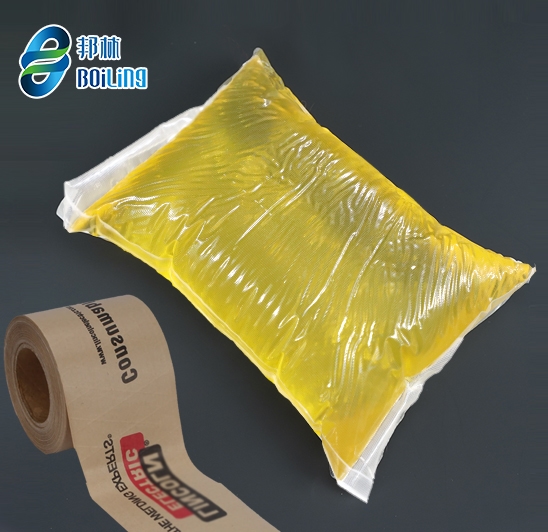
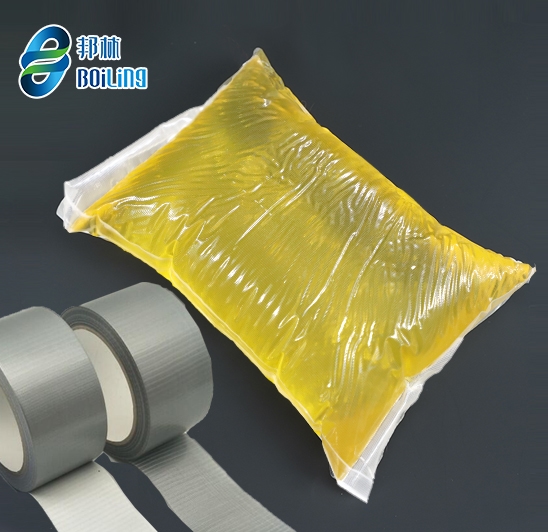
BoiLing develops pressure-sensitive hot melt adhesive solutions for tape applications, including kraft paper and packaging tapes. Its Taśma papierowa kraft klej topiony na gorąco page describes use on cardboard, paper, and other packaging materials. A production decision still requires testing with the converter’s backing, carton surfaces, equipment, and acceptance criteria. Provide the backing and primer construction, target adhesive coat weight, coating method, temperature and line-speed window, roll dimensions, carton samples, application equipment, storage sequence, current failure, and acceptance criteria. BoiLing can then discuss a relevant product data sheet and sample plan. Request a customized sample when standard grades cannot meet the required substrate, coating, converting, cold-application, unwind, or documented performance window.
Często zadawane pytania
Is Hot Melt Packaging Tape Suitable for Recycled Cartons?
It can be, provided the adhesive, backing, adhesive coat weight, application pressure, and carton surface are compatible. Test multiple representative carton lots because recycled liner surfaces can vary.
Why Can the Same Tape Perform Differently on Two Carton Lots?
Fiber length, dust, coatings, print, porosity, moisture, storage, and surface strength can change wet-out and the location of failure. Record the carton supplier and lot during testing.
Which Tests Matter Most for Packaging Tape Adhesive?
Use controlled tack, peel, and shear methods together with filled-case closure trials, roll-aging checks, and application-equipment tests. No single test represents the full package or its changing distribution environment.
How Should Cold-Temperature Performance Be Evaluated?
Define whether tape is applied cold or applied warm and cooled later. Record tape and carton temperatures, dwell time, conditioning sequence, handling, inspection intervals, failure modes, and acceptance limits.
When Should a Converter Request a Customized Adhesive Sample?
Request customization when standard grades cannot meet the verified backing, carton, coating-line, winding, unwind, application-temperature, or service requirements. Send physical materials and measurable acceptance criteria with the request.
 Skonsultuj się
 aplikacji Whatsapp
 Zostaw wiadomość
 góra
góra