








Tabela de Conteúdos
Notícias relacionadas
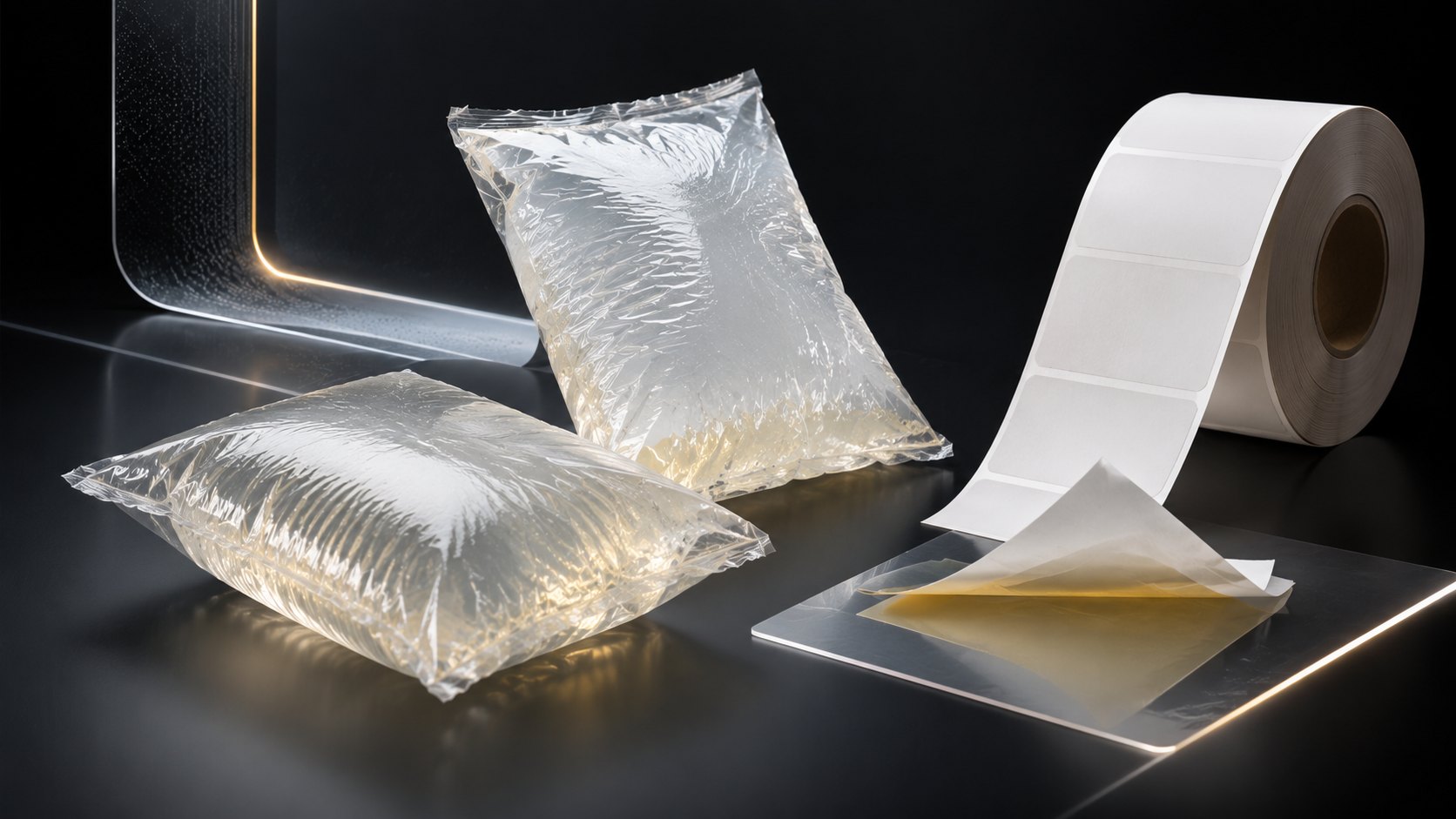
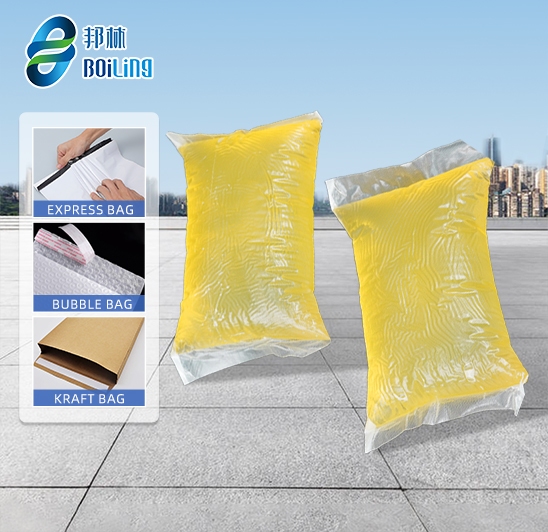
How Does PE Film Thickness Affect Express Bag Hot Melt Glue Performance?
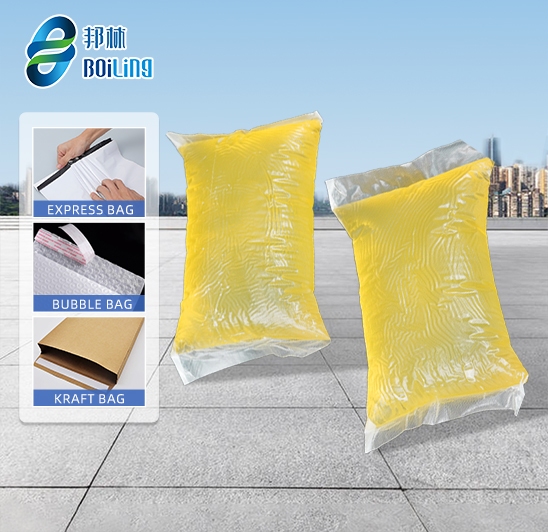
PE film thickness changes saco expresso cola fundida quente performance because it changes how the bag web bends, heats, stretches, and transfers stress through the adhesive strip. Thin film can wrinkle or distort more easily during coating, while thicker film is stiffer and may need more pressure for full flap contact. For courier-bag converters, purchasing teams, process engineers, and QA managers, thickness should be evaluated with PE grade, recycled content, print, surface treatment, adhesive viscosity, coat weight, application temperature, liner release, and closing pressure. ASTM D2578 also shows why surface wetting must be checked separately from film gauge.
Why Does PE Film Thickness Change Express Bag Hot Melt Glue Performance?
Film thickness mainly alters the mechanical properties of PE film, rather than its surface chemical composition.Two PE films can present similar surface chemistry while responding differently to heat, pressure, and peel stress.
What Happens With Thin PE Film?
Thin film has lower bending stiffness and less resistance to local heating. Excessive melt temperature, web tension, coat weight, or nip pressure can create curl, wrinkles, stretching, squeeze-out, or liner misalignment.
During a trial, record web tension, adhesive temperature, line speed, and visible distortion. Poor tracking after coating may come from heat or tension rather than insufficient tack.
What Happens With Thicker PE Film?
Thicker film is more dimensionally stable, but greater stiffness can reduce conformability when the flap closes over folds, printed areas, or small surface irregularities. Insufficient closing pressure can leave incomplete adhesive contact.
ASTM D3330/D3330M notes that backing stiffness and stretch can influence peel-test response. When gauges differ, peel values therefore reflect both adhesive behavior and backing mechanics.
Which Variables Can Matter More Than Film Thickness?
A gauge change often arrives with other material changes. Procurement should not approve a new film based on microns alone.
How Do Surface Treatment and PE Grade Affect Wetting?
ASTM D2578-23 measures wetting tension on PE and PP films. It states that wetting tension relates to the ability to accept adhesives but is not a complete measure of adhesion.
It’s often cited 35 dynes/cm threshold only fits Type 1 PE printing processes, and is not applicable to all hot melt adhesive coating scenarios.Corona treatment, additives, slip agents, recycled content, storage age, and contamination can all change the bonding surface. A thicker film with poor treatment can bond worse than a thinner, properly treated film.
Why Should Printed and Recycled Films Be Tested Separately?
Ink can become the actual bonding surface, while recycled PE may vary in composition and additives. The project’s express-bag data separates conventional PE, LDPE, new PE, reclaimed material, and ink-containing material rather than treating every PE construction as identical.
Ask whether the recommendation assumes virgin, recycled, printed, or unprinted PE. That question is more useful to a supplier than giving film thickness alone.
Which Express Bag Hot Melt Glue Parameters Should Buyers Compare by Film Gauge?
After defining the substrate, buyers need measurable adhesive and process data. The target is a stable coating and closure window, not simply the highest tack.
Which Parameters Belong on the Technical Datasheet?
For the express-bag series in the supplied knowledge base, the reference chemistry uses thermoplastic elastomers such as SIS/SBS, tackifying resins, and additives.
A concise reference for the listed express-bag series is:
| Parâmetro | Reference value | Test Standard | Why buyers check it |
|---|---|---|---|
| Base chemistry | Thermoplastic elastomers such as SIS/SBS, tackifying resins, additives | – | Substrate wetting and pressure-sensitive behavior |
| Ponto de suavizamento | 70–95°C | ASTM E28 (Ring & Ball) | Heat response and creep risk |
| Viscosidade | 1,000–2,500 cps at 180°C | Brookfield Viscometer | Coating flow and equipment compatibility |
| Operating temperature | 150–180°C | – | Wetting versus film heat sensitivity |
These are reference values from the supplied product knowledge base. Final approval should use the latest TDS for the selected grade.
Which Performance Tests Matter After Coating?
Compare initial tack, peel adhesion, shear or holding performance, liner release, coating uniformity, edge lift, and film deformation. ASTM D3330/D3330M supports peel comparison and quality assurance;ASTM D3654/D3654M covers shear adhesion of pressure-sensitive tapes.
Neither of these lab test results can replace actual finished bag production trials, as peel and shear strength data cannot simulate all real logistics service conditions.
How Should Converters Validate Thin and Thick PE Film Before Mass Production?
A controlled trial should expose the interaction among film, adhesive, equipment, and closure conditions. Changing several variables together makes root-cause analysis difficult.
What Should the Trial Matrix Include?
Use the minimum, nominal, and maximum gauges planned for production. Keep adhesive batch, coating width, liner, application method, and conditioning time controlled.
A practical qualification checklist should include:
-
PE/LDPE grade, thickness, recycled content, print, and treated side
-
Wetting-tension check where appropriate
-
Adhesive viscosity and softening point from the current TDS
-
Melter, hose, and nozzle temperatures
-
Coat weight or adhesive-strip dimensions
-
Line speed, web tension, and closing pressure
-
Tack, peel, shear/holding, liner release, and failure mode
-
Warm/cold conditioning relevant to shipping
How Should the Results Be Judged?
Do not approve a gauge because it passes one peel test. Identify whether failure is interfacial, cohesive, liner-related, or caused by film deformation. ASTM specifically cautions that peel results are influenced by backing and adhesive properties and may not directly represent functional performance.
Then close finished bags using the real flap geometry and pressure and condition them under expected logistics temperatures. The trial should produce an approved process window covering film construction, adhesive grade, temperature, coat weight, and closure conditions.
What Should Procurement Ask the Adhesive Supplier Before Approving a Film Change?
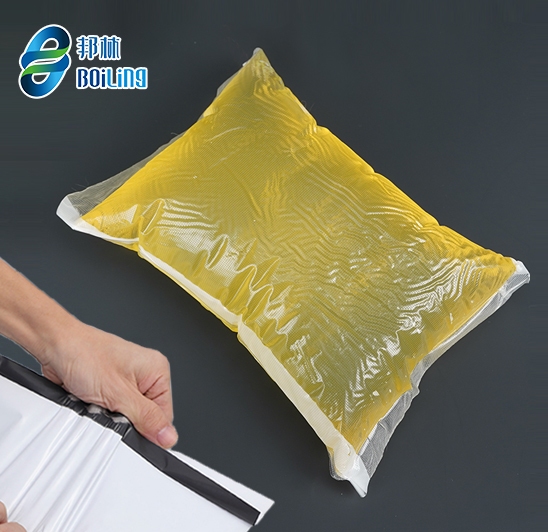
A technically useful supplier should connect formulation data with the converter’s film and equipment rather than simply state that the adhesive “works on PE.”
Which Questions Reduce Purchasing Risk?
Ask for the current TDS and SDS, substrate range, viscosity test condition, softening point, application-temperature window, shelf life, sample policy, and batch quality documentation. Ask specifically what changes for LDPE, recycled, printed, or differently treated film.
Provide film samples, coating method, target line speed, adhesive-strip dimensions, liner construction, and shipping-temperature range so the supplier can recommend a relevant starting window.
What Should Happen Before a Bulk Order?
Run a sample or pilot batch on the actual line. Set acceptance criteria before testing, retain approved samples, and record the settings used. If film supplier, formulation, print, or gauge changes later, repeat the affected checks rather than carrying the old approval forward.
Professional Technical Support from Hangzhou Boiling Adhesive Technology Co., Ltd.
Boiling Adhesive specializes in manufacturing HMPSA customized for express bag sealing. We provide targeted viscosity guidance, matched construction temperature parameters, free sample testing and full process verification services for film conversion factories. Our technical team will assist you in formulating trial process parameters when adjusting PE film thickness, recycled material proportion or printing designs. Customers may send actual PE film samples and production equipment parameters to our team for personalized adhesive matching recommendations.
Conclusão
PE film thickness affects express bag hot melt glue through stiffness, heat response, conformability, and stress transfer, but thickness alone does not determine adhesion. Buyers should qualify film gauge together with PE grade, treatment, print, viscosity, application temperature, coat weight, and closing pressure. The most useful purchasing decision comes from a controlled line trial across the real film range, followed by peel, shear, liner-release, aging, and finished-bag checks. Approve a documented process window, not a single test number.
FAQ
1. Does thicker PE film always need stronger express bag hot melt glue?
No. Thicker film may require better conformability or more closing pressure, but adhesive choice also depends on surface treatment, PE grade, print, coating weight, temperature, and the required logistics performance.
2. Can one express bag hot melt glue work on several PE film thicknesses?
Often yes, if the film surfaces and process conditions remain compatible. Qualify the thinnest and thickest planned gauges, then document acceptable temperature, coat weight, line speed, liner, and closing-pressure ranges.
3. Why does thin PE film wrinkle during hot-melt coating?
Thin film is more sensitive to localized heat, web tension, and nip pressure. Check application temperature, coating amount, line tension, cooling, roller pressure, and alignment before changing the adhesive formulation.
4. Should wetting tension be checked when only PE film thickness changes?
Yes, especially when the new gauge comes from a different resin formula, extrusion process, corona treatment level or raw material supplier. ASTM D2578 is a preliminary screening method for surface activation, yet practical adhesion tests on real production lines remain mandatory.
5. What should buyers send an adhesive supplier before requesting a sample?
Send the actual film, gauge range, PE type, recycled content, printed side, liner, coating method, line speed, application temperatures, strip dimensions, and expected storage conditions so the sample recommendation reflects production.
 Consultar
 Whatsapp
 Deixar Mensagem
 cima
cima