







Table of Contents
Related news
How to Improve Adhesive Compatibility When Manufacturing Multi-Layer Courier Bags
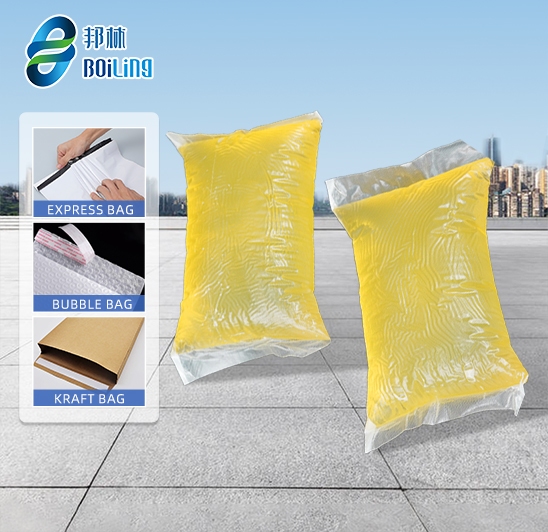
Adhesive compatibility in multi-layer courier bags depends on the surface that actually meets the glue. A structure may include coextruded PE, recycled-content film, printing, coatings, cushioning layers, and a liner, yet the closure adhesive contacts only one surface. For courier-bag converters, process engineers, QA teams, and buyers, the task is to identify that interface, control its condition, match hot melt viscosity to the coating process, and validate the finished bag. More layers do not automatically require “stronger glue”; they create more variables affecting wetting, stress, heat response, and failure mode.
Why Do Multi-Layer Courier Bags Create More Adhesive Compatibility Problems?
A single-layer PE bag gives the converter a relatively simple interface. In a multi-layer structure, the outer film, seal layer, print, recycled layer, and cushioning layer may behave differently during coating and closure.
Which Layer Actually Controls the Closure Bond?
The layer touching the adhesive controls wetting and interfacial adhesion. If the closure strip is coated onto PE, then the relevant questions are PE grade, surface treatment, additives, print, and contamination. A buried barrier, recycled core, bubble layer, or another internal material may still affect stiffness and heat flow, but it does not directly define the adhesive interface.
This distinction prevents a common purchasing mistake: describing the bag only as “multi-layer film” without telling the adhesive supplier what is present on the bonding surface.
How Can Internal Layers Still Change the Bond?
Internal layers change film stiffness, heat flow, stretch, and stress distribution. A stiffer laminate may need more closing pressure, while a cushioning layer can deform locally. Document both the exposed bonding surface and the complete film structure before trials.
The article How Are Poly Mailers Manufactured? is useful when mapping the relationship among film construction, printing, liner, closure strip, and final bag quality.
Which Surface Variables Should Be Controlled Before Changing the Adhesive?
Most compatibility failures start at the interface. Before requesting a different hot melt grade, confirm whether the incoming film surface has changed.
Why Are Surface Treatment and Printing So Important?
PE and PP are low-surface-energy plastics. ASTM D2578-23 explains that their ability to retain inks, coatings, and adhesives depends strongly on surface character and can be improved by surface treatment. The standard also states that wetting tension alone does not fully predict adhesion.
Corona treatment, slip additives, antiblock agents, contamination, recycled content, and printing can all alter wetting. Record the treated side and inspect the actual bonding surface whenever a film lot changes.
What Should Buyers Tell the Adhesive Supplier About the Film?
Provide the polymer family, layer structure, total gauge, exposed seal-layer resin, recycled-content percentage, printing system, treated side, and any coating or additive known to be on the surface. If the bag combines PE film with bubble cushioning or other layers, send the actual finished construction.
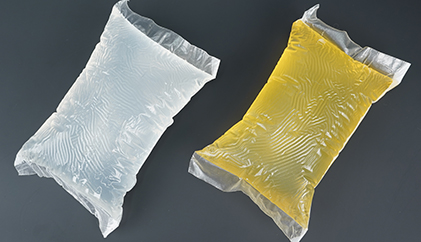
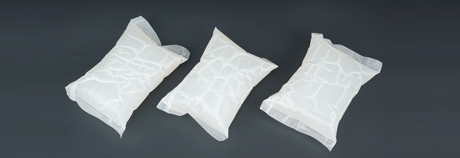
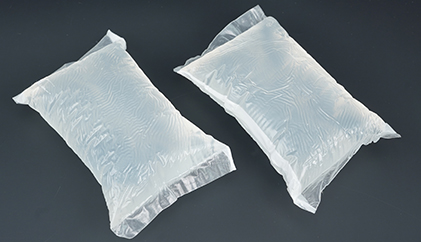
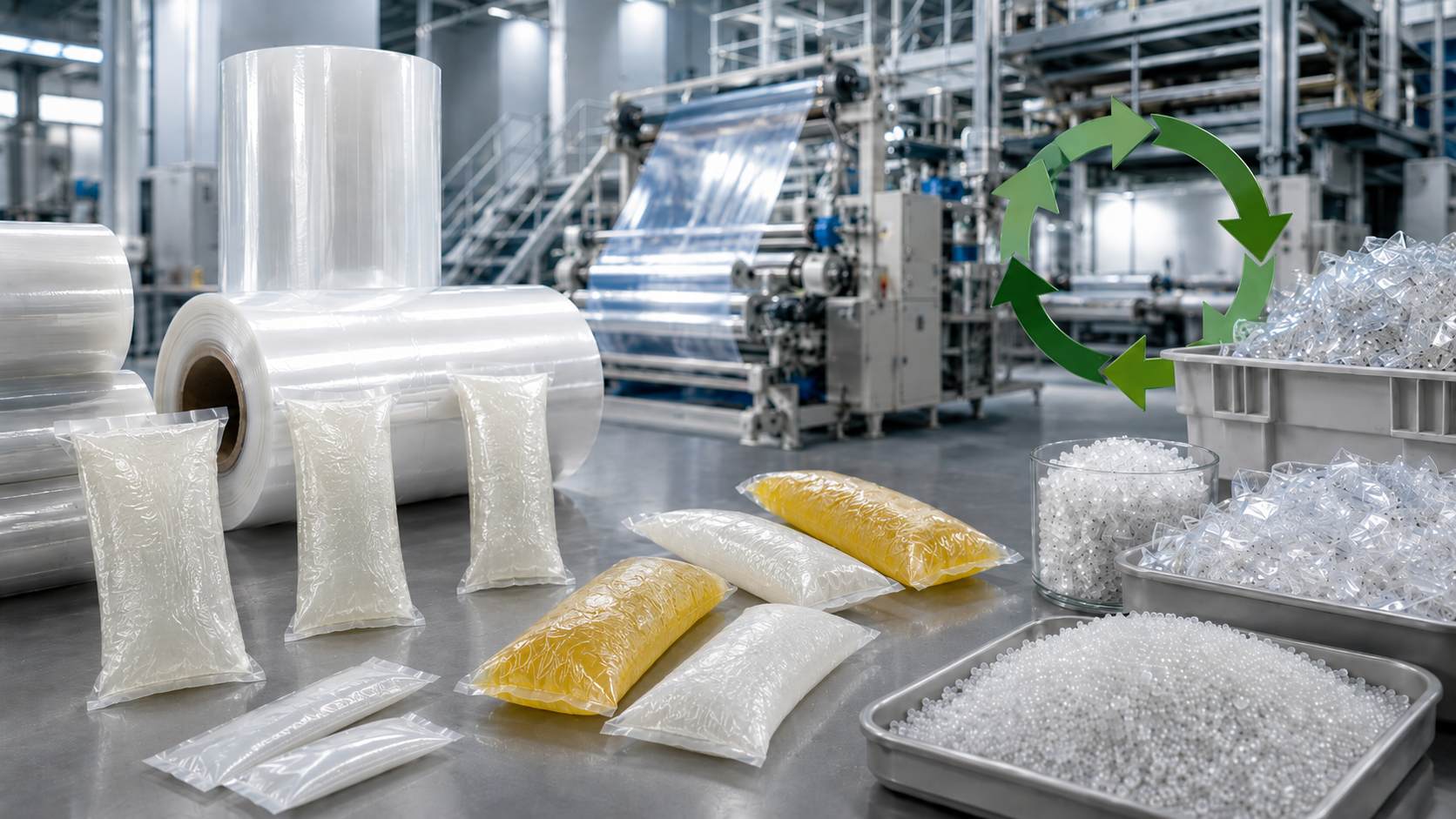
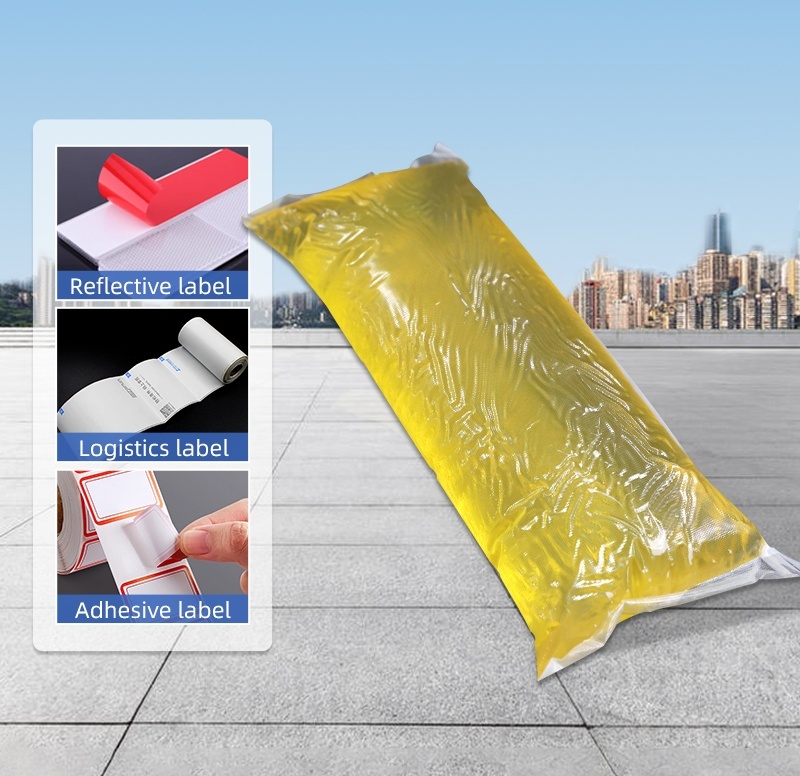
The Express Bag Hot Melt Glue range covers adhesives for express bags, bubble mailers, courier bags, and related packaging structures, but the selected grade still needs qualification on the converter’s material.
Which Hot Melt PSA Parameters Should Be Matched to a Multi-Layer Bag?
The adhesive must wet the exposed surface while remaining stable through the converter’s melter, hose, nozzle, coating width, line speed, and cooling conditions.
Which Process Parameters Need a Defined Window?
The current Express Bag Hot Melt Glue operating guide recommends 160–170°C for the glue cylinder and 165–175°C for the hose and nozzle, with more than 30 minutes of preheating for first use. It also recommends checking substrate surface tension and running a small-scale trial when new material batches are introduced.
| Parameter | What It Controls | What to Record During Trial |
|---|---|---|
| Melt viscosity | Flow and wetting | Value at stated test temperature |
| Application temperature | Wetting and film heat exposure | Tank, hose, and nozzle settings |
| Coat weight/strip size | Bond reserve and cost | Width, thickness, or mass per area |
| Closing pressure | Contact across the flap | Roller/nip setting or closure method |
| Line speed | Cooling time and coating stability | Actual production speed |
Stable viscosity becomes especially important when a line alternates between different film structures. How Consistent Viscosity in Express Bag Hot Glue Improves Yield provides additional troubleshooting context for coating variation and rework.
Why Is More Adhesive Not Always the Fix?
More coat weight can mask poor wetting but may create squeeze-out, liner contamination, higher cost, or creep. More heat can improve flow but may distort film. Identify whether the problem is wetting, pressure, rheology, liner release, or aging before adjusting the process.
Compatibility issues should be fixed at their root cause, rather than masked by applying a heavier adhesive strip.
How Should Converters Test Compatibility Across Different Bag Constructions?
Qualification should compare complete bags under controlled conditions. A hand-coated strip on one film sample cannot represent every layer combination, print design, or production speed.
What Should Be Included in a Compatibility Matrix?
-
Bag structure and total film gauge
-
Exposed bonding-layer resin
-
Virgin/recycled content and treated side
-
Printed versus unprinted bonding area
-
Adhesive grade and batch
-
Tank, hose, and nozzle temperature
-
Coat weight or adhesive-strip geometry
-
Line speed and closing pressure
-
Tack, peel, holding/shear, liner release, and failure mode
-
Warm/cold storage and aging conditions
How Should a Failure Be Diagnosed?
Record where failure occurs: at the film interface, within the adhesive, at the liner, in the ink layer, or in the film itself. Courier bags need balanced tack, peel, holding power, liner release, and storage stability—not simply the highest peel value.
A cohesive split calls for a different response from poor surface wetting. Ink transfer points toward another root cause again. Recording failure mode prevents unnecessary adhesive changes.
What Should Procurement Ask Before Approving an Adhesive for Multi-Layer Bags?
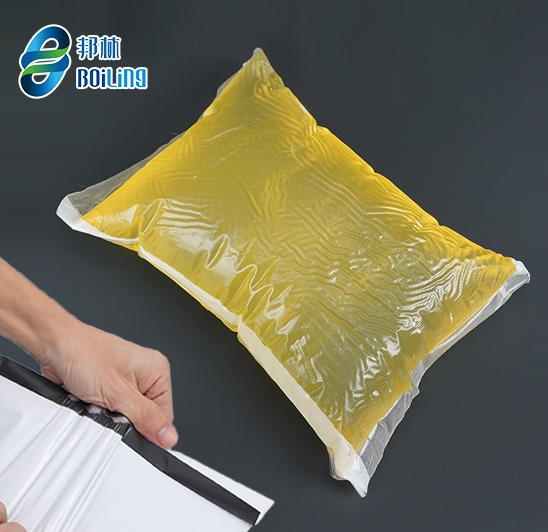
A useful supplier should ask about film construction before recommending a grade. If the conversation starts and ends with “PE bag glue,” important variables are being missed.
Which Supplier Questions Reduce Trial-and-Error?
Ask for the current TDS and SDS, viscosity test condition, application-temperature range, softening point or heat-resistance guidance, supported film types, storage requirements, shelf life, and batch quality controls. Ask whether the supplier has different recommendations for virgin PE, LDPE, recycled PE, printed film, or mixed bag structures.
Ask which line parameters must remain fixed during the first trial. Buyers can also review the Logistics Packaging solution when defining the broader transport and sealing conditions for the project.
What Should Happen Before Bulk Purchasing?
Send representative finished bag material and run it at the intended speed and coating width. Condition sealed bags under expected storage temperatures, then inspect peel, liner release, creep, and visible defects. Approval should end with a documented material-and-process window for future lots.
If the exposed layer, recycled-content percentage, ink system, film supplier, liner, or bag construction changes, repeat the affected checks rather than assuming the previous approval still applies.
Professional Technical Support from Hangzhou Boiling Adhesive Technology Co., Ltd.
Hangzhou Boiling Adhesive Technology Co., Ltd. specializes in HMPSA solutions for express bags and logistics packaging. Boiling Adhesive provides targeted viscosity guidance, matched application-temperature parameters, sample testing, formulation adjustment, performance evaluation, and production-line verification for film converters. When customers change PE layer structures, recycled-content ratios, printing designs, film gauge, or production speed, they can send actual courier-bag samples and equipment parameters to our technical team. We can then recommend a trial process window covering adhesive grade, temperature, coating condition, surface preparation, and closure pressure, helping the converter isolate compatibility problems before mass production and reduce repeated line adjustment.
Conclusion
Improving adhesive compatibility in multi-layer courier bags starts with identifying the real bonding surface and controlling the variables around it. Film structure, surface treatment, recycled content, printing, viscosity, application temperature, coat weight, line speed, and closing pressure should be tested as one system. Buyers should not solve every failure by adding more glue or heat. A controlled trial on the actual bag construction, followed by peel, shear, liner-release, aging, and failure-mode checks, provides a safer basis for bulk approval.
FAQs
1. Does a multi-layer courier bag always need a higher-strength hot melt adhesive?
No. Additional layers mainly change stiffness, heat response, and stress distribution. Adhesive strength still depends on the exposed bonding surface, treatment, print, coating conditions, closure pressure, and required shipping performance.
2. Why can the same express bag adhesive fail after changing film suppliers?
The new film may use a different resin blend, additive package, recycled content, corona treatment, or print system. Even at the same thickness, these changes can alter wetting and peel behavior.
3. Should converters test surface tension on every multi-layer PE bag?
Surface tension checks are useful whenever incoming film, surface treatment, or film supplier changes. ASTM D2578-23 helps assess PE/PP wetting tension, but actual adhesion testing is still needed because wetting tension alone does not predict bond performance.
4. Which tests are useful for courier-bag hot melt PSA qualification?
Use tack, peel, shear or holding power, liner release, coating appearance, and aged finished-bag tests. ASTM D3330 and D3654 can support comparative quality checks when conditions and substrates are properly controlled.
5. What should a converter send an adhesive supplier for compatibility testing?
Send the finished film structure, exposed bonding layer, gauge, recycled-content percentage, print details, treated side, liner, line speed, coating method, temperature settings, strip dimensions, and expected shipping conditions.
 Consult
 Whatsapp
 Leave Message
 top
top