







One Adhesive for Every Market? Why Exporters Need Climate-Split Grades for Bags and Labels
A courier bag sealed with one glue holds fine through a Rotterdam winter, then lets go within a week on a Jakarta dock. That isn’t a quality defect but a spec call made years ago and never revisited. BoiLing’s datasheets give a cured hot melt PSA a working range near -20°C to 80°C, softening points mostly between 70°C and 120°C. Trouble is, every such number describes one recipe inside one band. Attempting to deploy a single grade for both Nordic winter and tropical summer conditions will compromise performance on one side. That has been the record all along. Climate-split is the honest answer: two or three tuned versions of the same product run side by side, and no recipe gets begged to work everywhere. A second grade costs little next to one returned container.
What Destination Climate Actually Changes in a Cured Adhesive0
Plenty of numbers crowd a TDS, yet overseas, a product’s fate mostly hangs on two of them. Call the first one the softening point, that temperature where the layer starts going soft. Rubber-based chemistry reads low on it; elastomer tape and label grades come down somewhere from 70°C to 120°C. Glass transition argues the opposite case, and it runs like this. Get colder than the layer’s number and a film that felt tacky on the factory floor the week before goes rigid, while a seal pressed in that rigid state never truly forms at all. Neither figure negotiates with weather. Many destinations park at one end permanently; the unlucky ones cross the whole range twice a year.
Sorted by destination, complaints stop looking random.
|
Destination band |
What the bag or label endures |
Failure that shows up first |
Which way to move the grade |
|
Cold / northern (winter below 0°C) |
Frozen film surfaces, cold warehouses, flap sealing at low ambient temperature |
Flaps lifting and label corners popping, the layer going glassy before the seal forms |
Cold-rated grade, tack preserved near -10°C |
|
Temperate |
Ordinary warehouse and van temperature cycles |
Little worth reporting, standard grades were written for this |
Standard grade |
|
Tropical / humid |
Docks and open yards at 30-40°C for weeks, humid through the whole season |
Bleeding seams, stacked bags blocking into each other, labels creeping out of square |
The too-soft grade dies here; move up in softening point and control the bleed |
|
Desert / hot-dry |
Interiors of containers baking, pallets standing out in direct sun |
Everything from the tropical list, only quicker, because the container starts the clock before sailing |
Heat-resistant grade plus planning how the container gets loaded |
One complication deserves stating. Fair enough, one bag can meet all four bands in one journey, out of a temperate factory, into a hot ship hold, through a cold last-mile hub. That changes no picking rule. Match the grade to the destination, not the route, because unloaded cargo lives where the ship dropped it.
Courier Bags and Labels Fail from Different Directions
Bag sealing glue and label adhesive aren’t one product wearing two hats, and their failure directions prove it.
Bag Grades: Soft by Design, and That Is the Weakness
BoiLing’s express bag series runs as model BL-601A2 on an SIS/SBS thermoplastic elastomer base, softening at 70-95°C around quick hand or machine sealing of PE film and kraft paper bags, with low-temperature performance on the datasheet for winter transport and cold-chain logistics. The cold-rated versions hold initial tack near -10°C, which is all a winter sorting yard asks. Here is the trap. That same low softening number is exactly what bleeds out in a tropical yard. The grade that saves a Nordic winter writes the Jakarta complaint ticket, and nothing about the seal was wrong the day it left the factory.
Label Grades: Built for the Freezer, Rarely for the Desert
The label shelf runs the argument backwards. Now a label grade runs on elastomer chemistry that softens near 90-110°C, and buyers judge it in two places. One place is the line, where the glue must wet a curved PE or PET bottle cleanly at speed. The other is the chiller, round after round of it. That is why cold flexibility shows up in the design on day one instead of later. Heat is the direction the freezer never tests. In a hot market, film and adhesive soften at their own rates until a label edge lifts or a whole film creases across a hot pallet. Complaints arrive from a desert market weeks after a freezer-grade container clears customs, and technically nobody picked a wrong grade. Local summer simply was never part of the spec conversation. The cold-chain label article goes through what a cured label adhesive survives between freezer and shelf.
Where a Middle Grade Genuinely Suffices
Three or four SKUs isn’t anyone’s automatic answer. A mid-range grade covers two adjacent bands respectably, temperate plus mild winter for instance. Whether splitting pays is a commercial call before it’s a chemical one. A market under ten percent of volume that produces one complaint class does better on the middle grade plus a frank heads-up to that buyer. Buyers sitting in an extreme climate all year, though, have earned their own grade.
Running a Split Grade Program Without Drowning the Warehouse
The chemistry is the easy half. Paperwork and habits sink most programs.
Ordering and Marking So Nothing Crosses Over
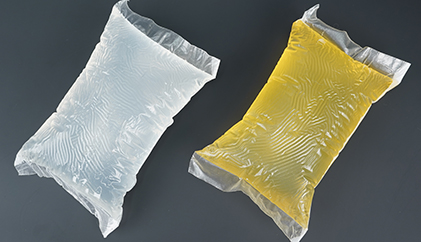
Every climate-split order needs three identifiers that survive from container to customer shelf. The first is a grade code printed somewhere it stays visible on the carton. The second is a batch number tying any block back to its production record, which BoiLing’s barcode-tracked workshop generates per batch anyway. The third is a destination tag on the paperwork. Customs files remember a container’s destination long after the warehouse forgets it. A regularly-exporting manufacturer moves formulation, viscosity, colour, block weight or packaging to a destination standard inside normal ODM scope, with samples plus TDS in the buyer’s hands before volume gets committed. One safeguard remains that costs next to nothing. Supplier and buyer settle a grade-naming convention once and for all, since two similar-looking yellow blocks will find the same pallet eventually otherwise. Down on the floor, two habits kill most crossover stories before shipping: cold and heat grades on separate racks, since label ink alone has failed more audits than a rack does. And each run finishes its grade to the last carton before the line switches.
Transit, Testing, and the Free Fixes
Half the July complaints tagged “tropical” are manufactured before a tropical port appears on the bill of lading, a closed container doing that alone. Stack pallets four high behind such heat and a soft bag adhesive becomes one laminated sheet of blocking claims, unsellable before anyone at the destination unwraps anything. A heat-resistant grade protects desert destinations, and so does a list of free habits: stow off the top tier, shade the dock wait, and keep finished cartons out of an open yard awaiting collection.
Verification wants one honest test series, not one hopeful sample. Concretely: each candidate grade gets sealed or coated, pieces spend a day conditioned at -10°C, 23°C and 45°C, peel and initial tack get read off that set the next morning, and the 45°C pieces sit out an extra week under seam watching. Lab hours stay small, and one pass maps the product line against the real destination list. Whether a cold market earns its own stock line is settled better by the mechanics in the winter brittleness analysis, and the logistics packaging page shows how BoiLing’s bag grades cover normal-temperature and cold-chain work side by side.

FAQ
For markets with consistent year round climate conditions, implementing climate split grades requires less effort than many anticipate. Once the destination list is real, the grade question narrows by itself, and a supplier holding the full range answers it with conditioned samples, starting from the contact page.
How many adhesive grades does a mid-size exporter really need?
Count two, three at most. One cold-rated grade handles the winter markets for you, a heat-rated one swallows the tropical and desert places, and everything left over runs on the middle grade. A fourth only shows up when one large market insists on its own standard requirements.
Does splitting grades mean changing the bag or label design too?
Look at everything above the adhesive layer and nothing moves at all. Carrier film, facestock, printing, none of it gets touched, and the only thing that changes is the recipe sitting underneath the same product structure. That restraint is why a split program stays one program instead of two.
Can the buyer in a cold market simply warm the bag before use?
Seals form in sorting yards and delivery vans, so advice aimed at the end user fixes almost nothing downstream. Cold decides at the moment of sealing, so either the flap took or it did not, and warming the bag later mainly gives the buyer a comfortable few minutes to discover which.
The company behind all this, Hangzhou Banglin Bonding Technology Co., Ltd., has produced block hot melt adhesive since 2005 under ISO 9001 quality control, selling across 23 provinces at home and exporting to Southeast Asia, the Middle East and South America. Courier-bag recipes (Series C, softening around 70-95°C) and label grades (near 90-110°C) already arrive in mixed climates, hence a destination standard counts as ordinary business there, with formulation, viscosity, colour, block weight and packaging shifting as routine ODM adjustments. Free 1-2kg samples plus a TDS arrive before any volume commitment. Substrate questions raised when a climate split gets designed around specific bag films are answered in the courier bag selection guide.
 Consult
 Whatsapp
 Leave Message
 top