






Hot Melt Adhesive for Courier Bag Sealing Strips: Tamper-Evident Bond, Low-Temperature Tack and Line Speed
A courier bag sealing strip lives or dies on one property: the glue stays permanently tacky under a release liner, then bonds the instant a customer peels and presses. That rules out ordinary packaging hot melt and points to a pressure sensitive hot melt adhesive, the elastomer based kind sold in blocks like BoiLing BL-601A2. Three purchase decisions decide the outcome before the first truckload ships. One, the bond must tear the film or ruin the strip when someone tries to reopen the bag, which is what makes it tamper evident. Two, the glue line must hold through winter transport, so the formula needs real low-temperature performance instead of a room-temperature datasheet. Three, the wet viscosity has to keep up with your coating or bag making line speed. This article walks through each point against the numbers a supplier should be able to put in writing.
What Express Bag Hot Melt Glue Actually Is
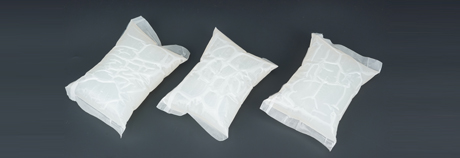
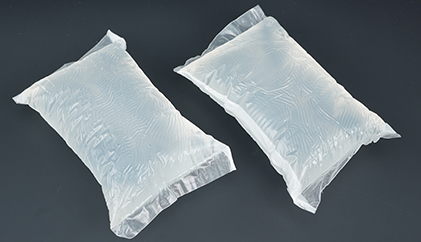
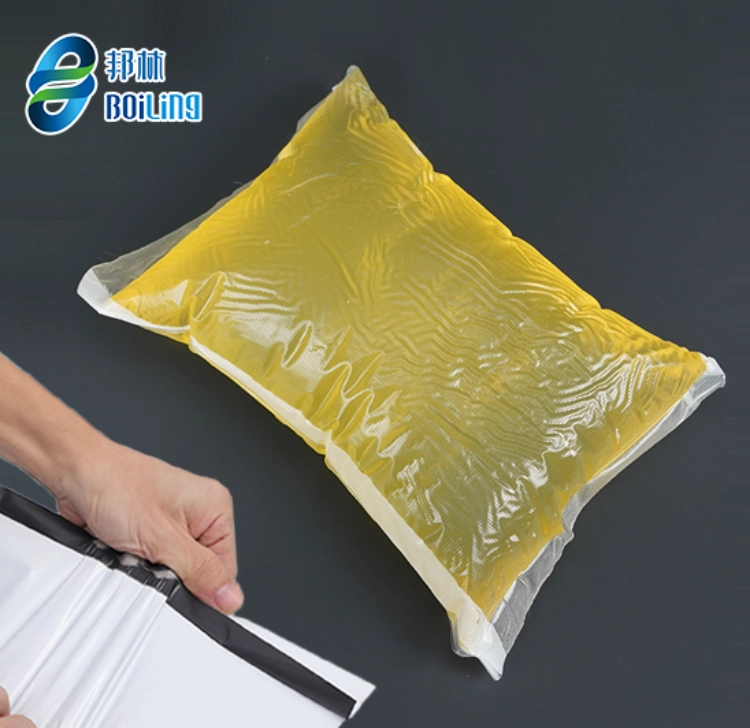
Express bag hot melt glue is a 100% solid adhesive, coated molten onto the bag flap, then covered with a release liner while still hot. Nothing evaporates in this system. There is no solvent, no water, no drying oven. Bond strength develops as the melt cools, and a pressure sensitive grade never fully crystallises, so it stays ready to stick after the liner goes on. A PSA hot melt creates that bond under light pressure alone, with no extra heat at the packing bench.
Blocks are the usual buying format, offered from 0.45 to 6.25 kg each so they drop into standard jacketed melter tanks. The melted glue is pumped to a slot head or spray applicator that lays the strip, and the same coating line that runs a pressure sensitive grade can run a packaging grade for carton flaps once the tank is swapped, because the applicator hardware stays the same. What changes is the chemistry in the drum.
Where the Tamper-Evident Property Comes From
Nothing gets added to the formula to make the strip tamper evident. It falls out of the bond type. Once a pressure sensitive PSA has wetted out a smooth PE film, peeling the flap back either destroys the film surface or wrecks the strip, and both leave visible damage that a neat re-fold cannot hide. A glue line that lets the flap lift, re-press and pass inspection is not a sealing strip at all; it is a reclosable one, and courier customers pay for the opposite. So when a supplier quotes a courier bag product, the question worth asking is whether the bond is designed to destroy the closure on reopening. That single sentence filters out mis-sold stock.
The Formulation Answers Most Questions Before Your Machine Does
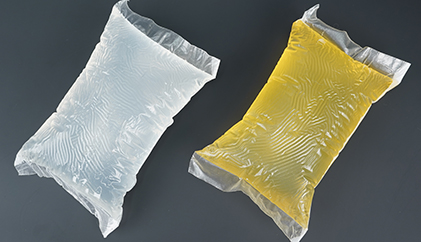
The BoiLing express bag series (model example BL-601A2) is built on thermoplastic elastomers, SIS or SBS, blended with tackifying resins, and it arrives as a yellow transparent block. A typical specification sheet runs a softening point of 70 to 95°C, a wet viscosity of 1000 to 2500 cps at 180°C, and a recommended working window of 150 to 180°C.
The softening point also works as a rough ceiling on heat resistance. A sealed bag riding in a truck body in July, or standing in a sun-loaded container yard, is the practical test of that number, and formulas in this band hold the flap closed where a softer glue line begins to creep.
|
Parameter (BL-601A2) |
Typical figure |
What it decides on your line |
|
Base chemistry |
SIS or SBS with tackifier resins |
Permanent tack under the liner, peel-and-bond behaviour |
|
Softening point |
70 to 95°C |
How the finished strip survives summer heat in transit |
|
Viscosity |
1000 to 2500 cps at 180°C |
Whether the bead wets fast enough and still holds its shape |
|
Working temperature |
150 to 180°C |
Tank settings, and how little thermal shock your film takes |
Viscosity Is the Line Speed Conversation
1000 to 2500 cps at 180°C covers a lot of ground, and the two ends suit two different jobs. The thin end of the range feeds spray application well, where the head moves fast and the bead has to level out on its own. The thick end keeps a slot bead standing tall on a bag making line, so the strip does not collapse or get squeezed to the edge when the flap folds.
Watch the bead, not the brochure, when you trial glue. A strip that wets the film slowly at high output starts as scattered open spots and ends as rejected bags at the packing table, and the viscosity is the first thing to look at. Bags running more pieces per minute deserve a thinner, faster wetting formula; lines that fight squeeze-out usually need the opposite direction. A supplier who ships a family with several viscosities (BoiLing keeps low viscosity grades for spraying and high viscosity grades for slot work in the same series) lets you tune the line instead of replacing the plant.
Substrate, Liner and Vibration: The Quiet Failure Points
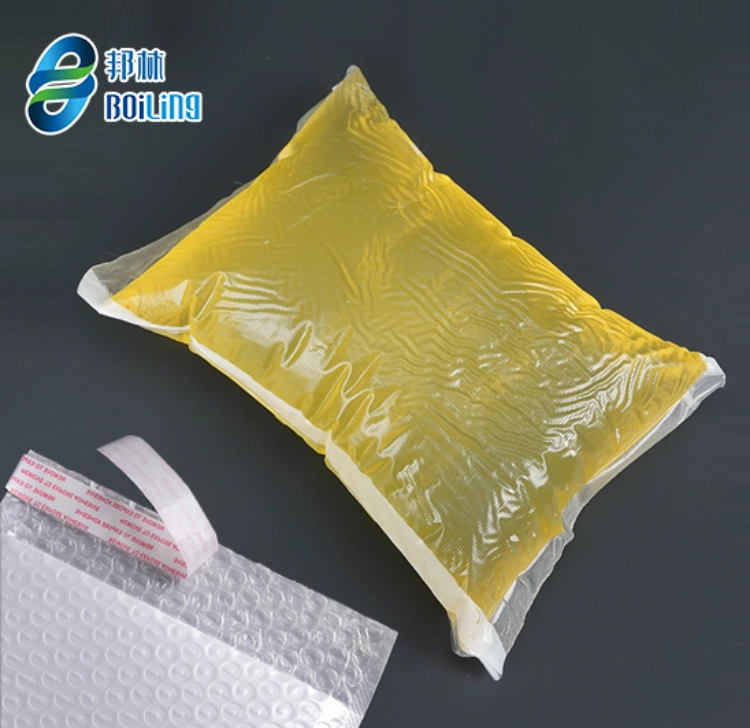
The strip touches more materials than most buyers expect, and each interface behaves differently. Virgin LDPE and PE laminate film coat cleanly; recycled content and heavy print change wetting, and kraft paper mailers are served by the paper envelope grade of the same series rather than the film formula. The release liner has to peel off the coating head cleanly at speed without dragging glue back, then release from the flap under one hand at a doorstep. Between those two moments the sealed bag sits in a delivery van crossing dozens of expansion and contraction cycles a day, and the adhesive keeps its grip while absorbing that vibration, which the Series C datasheet writes in as retention strength through logistics vibration. Bubble lined mailers get their own variant because the foam edge lifts if the strip is too thin or too stiff (see the bubble mailer product page).
Winter Is Where Sealing Strips Show Their Quality
PSA hot melts in general stay workable from roughly -20°C to 80°C depending on the formulation, and the express bag grade is written around low-temperature performance for winter transport specifically. A bag that seals happily in a June factory and splits open in a December sorting yard was never tested against the cold it would actually meet, which is the argument for trialling samples at the low end of your shipping season rather than the comfortable middle.
Cold chain boxes ride the same chemistry family as normal parcels, and a bag adhesive covering both normal temperature and cold chain logistics keeps your liner, your flap stock and your melter settings in one system instead of two. The practical way to buy is blunt: mail your film samples and the coldest destination temperature you ship into, and the supplier lab adjusts the formula to that envelope. BoiLing’s 500 square meter R&D center does this application work as its regular job, tailoring formulas to the substrate the buyer actually runs.
Why Batch Consistency Matters More Than the First Sample
A trial drum that performs and a third container that does not is a familiar story in this category, and it is a manufacturing discipline problem, not a chemistry one. BoiLing keeps an ISO 9001 system across the process, with SAP, MES and cloud barcode tracking tying every batch back to its raw material lots, and a US-imported rheometer in the R&D center simulates line conditions before a formula leaves the building. On the paperwork side the range covers RoHS, REACH and PAHs testing through SGS. Since 2005 the company has grown to 25,000 tons of yearly capacity across 15 production machines, exporting to Southeast Asia, the Middle East and South America through BoiLing.
Before a bulk order, 1 to 2 kg of free sample blocks let you coat the strip on your own machine, and blocks arrive wrapped in release film or release paper so the trial looks exactly like production.
Before anything goes on a purchase order, hand the supplier three facts: your film structure, your coating equipment, and the coldest temperature the sealed bag will ever see. Everything else (viscosity choice, softening point, liner pairing) follows from those answers. The contact page is where a formula conversation usually starts faster than a price sheet.
FAQ
How much adhesive does a first order require?
Standard stock grades ship from 500 to 1000 kg. A formula tailored to your film and your climate is treated as custom work and usually starts at 2 to 3 tons, with the sales team confirming the number for the specific request.
How long can unused blocks sit in the store?
A dry, cool store gives 12 to 24 months of shelf life depending on the base composition of the grade. Write the production date on every opened carton, because a reopened block sitting through a humid summer is a different animal than a sealed one.
Can block size and packaging be matched to a plant’s melter?
Yes. Blocks are cast from 0.45 to 6.25 kg each so they fit your tank throat and melt without bridging, and packing runs from cartons of 15 to 25 kg up to pallets of 500 to 1000 kg, with release film or release paper wrapping and custom labeling both supported.
 Consult
 Whatsapp
 Leave Message
 top