








product
Pressure Sensitive Hot Melt Adhesive
Paper Handbags Hot Melt Adhesive

Paper Handbags Hot Melt Adhesive

When making paper handbags, the most worrying issue is that as the customer holds the bag, the handle may suddenly come off, or the bottom of the bag may crack after being loaded with some heavy items. This is not only a quality problem but also directly affects the brand image. Our special heat-melt adhesive for paper handbags is specifically designed to solve these embarrassing situations. Simply put, it is a “structural adhesive” that quickly, firmly and beautifully bonds the various key stressed parts of the handbag on the production line – such as the junction of the handle and the bag body, the reinforcement layer of the bag bottom, and the adhesive seams on the sides – to ensure a strong, stable and aesthetically pleasing bond. It not only needs to be firmly bonded to withstand repeated pulling but also needs to adapt to the high-speed production rhythm, and the adhesive line must be clean and not seep out to affect the beauty of the printed surface of the paper bag. What we provide is to make this bonding process a reliable guarantee for the sturdy and durable nature of your paper bags.

Related Products
Features

1.Exceptional Structural Bond Strength – Tackles “Handle Drop-Off” and “Bottom Blowout”


The handle attachment points and the bottom panel are the most stressed areas of a paper bag. This adhesive offers powerful wetting and grabbing force on kraft paper, cardboard, and even some coated papers. It creates a rivet-like secure bond, effectively preventing handles from being pulled out under load or the bottom from splitting after carrying weight.


2.Fast Curing with Precise Open Time – Matches High-Speed Bag Making Machines


The open time and curing speed are precisely balanced. This ensures that on automated bag-making machines, the adhesive allows sufficient time for precise component positioning before pressing, yet sets rapidly afterward. This enables bags to move immediately to the next processing stage or packing without slowing down the line. Once cured, the adhesive layer remains flexible, moving with the paper’s slight deformation to avoid brittleness.


3.Fine, Clean Glue Lines – Ensures a Premium Appearance


Optimized viscosity control results in even, consistent glue lines after application with minimal stringing. This is crucial for beautifully printed bags, as it effectively prevents adhesive bleed-through that can stain graphics or create unsightly glue marks, ensuring a clean, high-end finished product.


4.Eco-Friendly & Safe – Meets Brand and Market Requirements


As a 100% solid content hot melt adhesive, it contains no solvents and is virtually odor-free during production and use, aligning with sustainable packaging trends. This is a significant plus for export markets and brands focused on environmental responsibility.


Product Parameters

Item Name

Handbag Hot Melt Adhesive

Base Material

Synthetic Rubber

Appearance

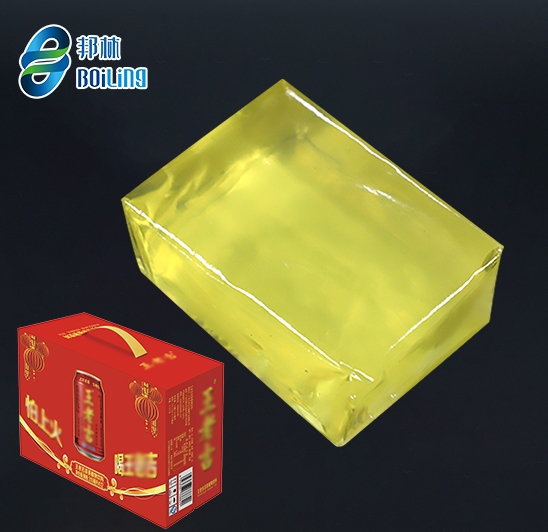
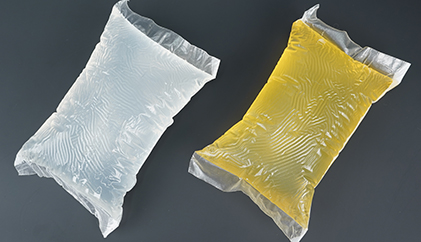
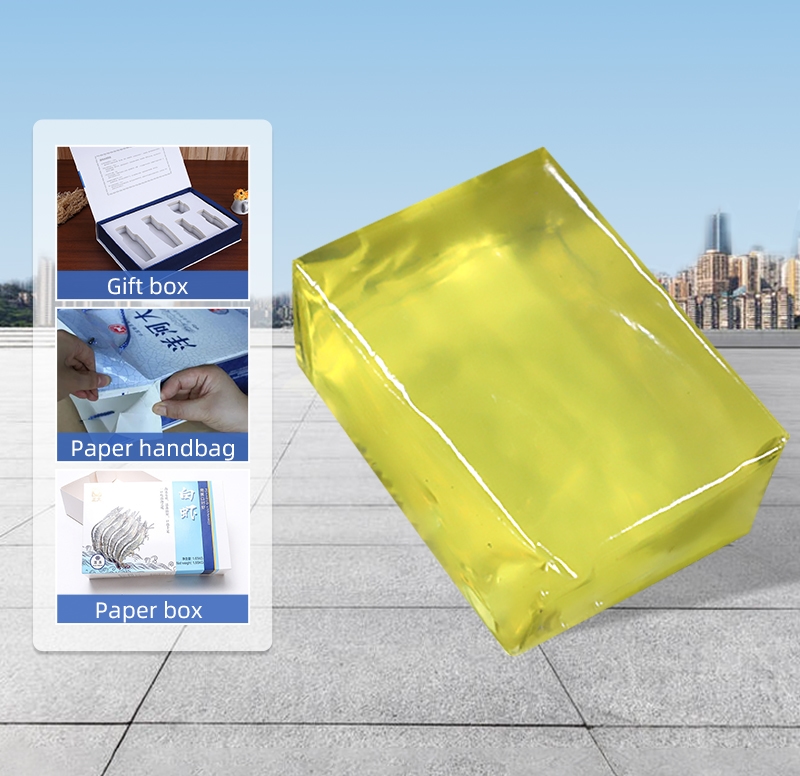
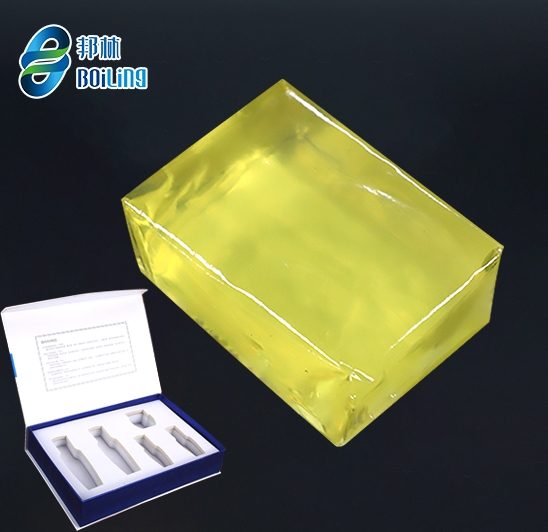
Yellow Block

Soft Point(℃)

70-90℃

Viscosity

1000-3500 cps @180℃

Application Temperature

160-180℃

Application areas/scenarios

This hot melt adhesive for paper bags is the ideal choice for automated or semi-automated production of medium to high-end paper handle bags. It is particularly suitable for:


Branded shopping bags for clothing, footwear, and gift retailers.


Heavy-weight specialty paper bags for luxury goods, cosmetics, and electronics packaging.


Laminated or coated grease-resistant paper bags for food takeout and the catering industry.


Bonding applications for other paper bags and cartons that require both high strength and an aesthetically pleasing finish.


Other Application areas/scenarios
Beverage carton hot melt adhesive Book box hot melt adhesive Carton Sealing Glue
handbags hot melt adhesive paper carton hot melt adhesive Self-adhesive carton hot melt adhesive
FAQ

Q1: Why does a handle pass the initial pull test but tear from the base after a few days of customer use?


A1: This is often a stress concentration issue. The handle base endures the most force. Check: 1) Is the bonding area large enough? We recommend maximizing the contact surface. 2) Was the handle material (e.g., paper cord, cotton rope) fully saturated and encapsulated by the adhesive during bonding? Sometimes, adding a small paper or fabric reinforcement patch at the handle base to distribute the stress works much better.


Q2: What can we do if the bond is weak when using specialty paper (e.g., with super-smooth coatings or high-gloss finishes)?


A2: This paper has low surface energy, making it hard for the adhesive to wet properly. Try two approaches: 1) Increase the application temperature by 5-10°C (within equipment limits) to improve adhesive flow. 2) More reliably, send us paper samples. We can test whether a formula adjustment is needed or recommend a primer (surface treatment) to prepare the paper surface first.


Q3: The adhesive in the machine has gradually darkened (turned yellowish/brownish). Will this affect its bonding strength?


A3: Slight discoloration is usually normal thermal aging and has minimal impact on adhesion. However, if it turns very dark, or you notice granules or abnormal stringing, it might indicate overheating or the adhesive being cycled in the tank for too long, leading to partial carbonization. This will degrade performance. Check your temperature settings, follow operating procedures, and properly handle residual adhesive in the tank during extended  downtime.


Q4: How can we confirm this adhesive is suitable for our existing equipment and paper bag materials before switching?


A4: The most reliable method is a “machine trial.” Provide us with samples of your typical paper bags (including both the most common and the most challenging ones to bond). We will send corresponding adhesive samples. You can then run them on your machine using actual production parameters for a period to see if there are any issues with bonding effectiveness or efficiency. This is the most straightforward validation method.


Contact Us