








How to Specify Hot Melt Adhesive for Freezer Labels: Application Temperature, Cold Storage, and Peel Testing
“Suitable for freezer storage” leaves an unanswered question: when is the label attached? A freezer label adhesive trial may cover a carton labeled in the packing room and frozen later; another pack may meet the applicator already cold. Those are different starts for the same cold-chain journey, so qualification needs to name the start and test the complete sequence.
Which temperatures must a freezer label adhesive specification separate?
Put the point of application at the top of the specification, before listing what the finished label must survive.
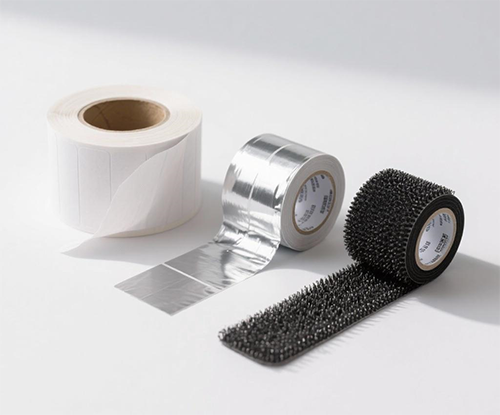
Label application and subsequent service conditions
Application temperature describes the conditions when the label is attached. Service temperature describes its temperature exposure afterward. These are separate requirements in label material selection guidance.
Write down package-surface temperature, room conditions, label-roll condition, and time before freezing. The service specification covers later storage and any warming or thawing. The temperature used to coat hot melt belongs separately in the converter’s manufacturing specification.
Warm application versus application to a frozen pack
“Label before freezing” gives the trial a clear sequence. Other orders may call for application in a chilled room or onto an already frozen pack. A service-temperature recommendation alone does not approve those cold application steps.
Ask which sequence the supplier’s recommendation covers. Put separate sample groups and approvals where customers use different sequences; the cold-applied group needs its own test.
How should facestock and package materials guide selection?
Evaluate the adhesive within the finished label construction and against the production package.
Label construction and the actual container surface
Describe the facestock, coating, liner, dimensions, print, and protective layer. “Plastic” is too broad for the package description: identify its material and finish, and supply actual samples. Shape matters as well as material.
A flat test panel can be useful, but keep actual packages in the program. If paper and film labels are both under consideration, give each construction its own result. The label adhesive product category offers a starting point for a discussion; the package trial decides whether a candidate meets the order.
Moisture, frost, and surface condition at labeling
Look at the surface when the label touches it. Is it dry, damp, or frosted? Condensation can interfere with contact and accompany tunneling or lifting at the edge. A trial conducted entirely on dry packages leaves the customer’s damp-surface condition unanswered.
For a frosted pack, agree on the preparation the line can perform and use it in the trial. Approval on a dry cold surface should not be extended to frost or standing water.
Which technical data do you need to request before ordering a trial?
Request information that connects the proposed grade to the complete use sequence.
Application limits and service limits with stated conditions
Ask which substrates were used to establish the minimum application temperature and service range. The recommended time for bond development also belongs in the reply. A peel or tack value is more useful when it comes with the application pressure, dwell time, and temperature used to obtain it.
For the converting team, the reply needs to identify the grade’s viscosity measurement conditions, coating window, and adhesive storage instructions. Put the grade identity beside these data so a family description does not end up on the trial sheet as a formulation-specific value.
Adhesion, release, and converting requirements
Before sending sample rolls to the customer, examine the cut and matrix removal. Then try liner release and dispensing at the intended speed. Release force depends on peel rate, which is why a satisfactory hand-peel result leaves the line-speed check open.
Agree with the customer on what initial attachment and later peel checks must demonstrate. The supplier’s proposed comparison needs to identify which failure observations to record.
How should you design peel testing for a cold-chain label?
Run a test plan that preserves the application history and the temperature at measurement.
Compare the actual application and conditioning sequences
The warm-application group’s history starts with attachment: pressure, time before freezing, and the subsequent cooling and storage. The cold-application group’s history starts with packages already at the specified condition. Give the laboratory each sequence in writing, with the samples clearly identified.
The timing of the peel measurement needs a decision before the samples are made. Some trials require a cold measurement, others a post-thaw measurement; a program can include both. Give each its own result. Within a candidate comparison, keep label construction and package surface the same.
Write down test conditions and failure mode
Have the laboratory select a method suitable for the label and package. ASTM D3330’s public guidance supports the use of representative surfaces for pressure-sensitive tape evaluation and explains that peel data needs to be considered with acceptance criteria. Confirm applicability before adopting it for a particular label construction.
Put specimen width, angle and speed, conditioning history, surface, temperature, and individual results in the report. Save the failed specimen too. Facestock tearing, adhesive residue, and edge lifting are different observations, even when a summary sheet calls each one a failure. The handling-cycle observations remain part of qualification alongside peel.
What must the pilot line demonstrate before commercial release?
Follow the label from dispensing through the agreed service cycle and customer inspection.
Application, freezing, handling, and thawing checks
Run the intended applicator and production packages for the pilot. Watch dispensing and placement, then inspect edge contact immediately after application. Put enough labeled packages to follow the specified storage sequence; a good-looking roll at the converter’s plant is only the beginning of this check.
At each planned check, inspect adhesion, edges, and print. Add barcode readability where required. Test thawing and repeated temperature changes when they belong to the workflow or an agreed challenge exposure.
Acceptance criteria and batch traceability
An acceptance sheet needs to distinguish application defects from failures during storage. State what appearance and readability are acceptable, where samples will be taken, and what leads to rejection. Put an accepted specimen beside failed specimens for the next review.
Put material lot numbers with the coating and application records. A later change in facestock, liner, package, or process needs to trigger the agreed rechecks. The label and tape application overview is a relevant supplier contact route; send the failed specimen with the stage at which it changed.
How can BoiLing support a freezer label adhesive trial?
The first detail to put in a BoiLing inquiry is whether you label before freezing or afterward. BoiLing manufactures hot melt adhesives and lists freezer labels among its label and tape applications. Its project materials describe formulation development and samples for defined testing requirements. Send package and label samples with application temperatures, moisture conditions, and the storage sequence. Add the peel-test plan and the acceptance sheet. The technical inquiry page can be used to request the proposed grade’s technical data sheet and discuss samples. Put the customer’s labeling and storage conditions in the trial before deciding to order production quantities.
Conclusion
Before ordering freezer label adhesive, put the sample approval and its conditions on one record. The record needs to show whether that sample was applied warm or cold, what happened during storage, and when peel was measured. Put those results beside the pilot-line observations of dispensing, edge contact, and readability. The next material or process change can then be reviewed against the construction that was actually accepted, with agreed rechecks where the earlier trial no longer answers the question.
FAQs
Can a label rated for freezer storage be applied to a frozen package?
Look for a separate minimum application temperature in the recommendation. Ask whether the supplier is covering an already frozen surface, and keep a trial of that application sequence in the package approval record.
Does freezer label adhesive bond through frost?
The trial needs to answer that specific question. Run the surface preparation permitted on the line and the actual frosted condition. A recommendation based on dry-surface application leaves that part of qualification open.
Is room-temperature peel testing enough for freezer labels?
Put the cold-chain sequence in qualification. Decide where a cold or post-thaw peel result is needed, then examine edge adhesion and identification at the service checkpoints. Room-temperature peel is one observation in that program.
Can one adhesive grade cover paper and film labels?
Give paper and film constructions separate trial results before sharing a grade. Run the same package and application sequence in the comparison, with peel, converting, dispensing, and stored-label observations retained for each construction.
What information does a cold-chain label converter need to send to a supplier?
The supplier needs label and package samples, temperatures at application, moisture conditions, and the storage and handling sequence. Add details of coating equipment, test requirements, the customer’s acceptance criteria sheet, and documented field‑failure observations.
 Consult
 Whatsapp
 Leave Message
 top