






Table of Contents
Related news
Hot Melt Adhesive for XPE Wall Stickers: Edge Curl, Paint-Safe Removal, and Liner Handling on the Coating Line
A wall sticker can look fine when it leaves the coating line and still come back as a complaint a month later. A corner has curled. The panel has slipped in a warm room. Or the customer has peeled it off and taken some paint along with it. Those complaints need different investigations. Buying a stronger hot melt for all three could solve one problem and make another worse.
Start with a finished sticker, including its release liner, rather than a loose piece of foam. Pulling off that liner is the first practical check: did the glue stay where it belongs? Once the panel is on the wall, holding and removal can be assessed. If the product is sold as removable, the condition of that wall becomes part of the claim.
Where to Start When an Edge Lifts
Check the Room and the Paint Finish
Was the sample approved in a warm showroom? Think of the customer fitting those panels in an 8°C storeroom. The showroom approval has not answered that customer’s question. Put some of the same panels on identically painted boards at 8°C and others at 23°C; compare the corners after application and again during aging.
Next, change the surface. Look closely at brushed or orange-peel paint and the reason is visible: the sticker cannot touch the whole surface as it can on flat glass. Include a board with the customer’s actual paint, even if it looks less convenient than the laboratory surface.
|
Symptom |
First possibility to investigate |
Useful trial |
|
Corners lift after several weeks |
Insufficient tack on that wall |
Apply and age panels at the lowest expected installation temperature |
|
Panel creeps in summer |
Inadequate holding performance in heat |
Load the assembly at the expected wall temperature |
|
Paint comes away on removal |
The paint film or adhesive and paint pairing is unsuitable |
Compare removable grades on matching painted boards |
|
Glue stays on the wall and the foam looks bare |
Separation at the foam bond or within the glue layer |
Inspect both faces and record where the break occurred |
|
Gaps open between panels |
Movement of the foam or a glue line that restricts movement |
Examine the edges after temperature changes |
Give Removal Its Own Test
“Paint-safe” needs a defined paint system and a removal procedure. Old paint that is barely attached to the wall may come away with a removable sticker too. Keep that weak-paint board in the trial as a difficult reference, but do not use it to promise clean removal from every wall.
Peel at 24 hours, a week and a month. Keep before-and-after photographs with the test sheet. Give glue residue and paint loss their own entries on that sheet. “No residue” would be a misleading pass if a patch of paint had come away with the panel.
Comparing Hot Melt Grades for XPE
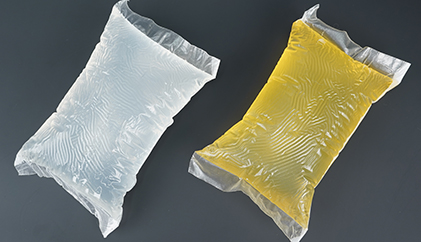
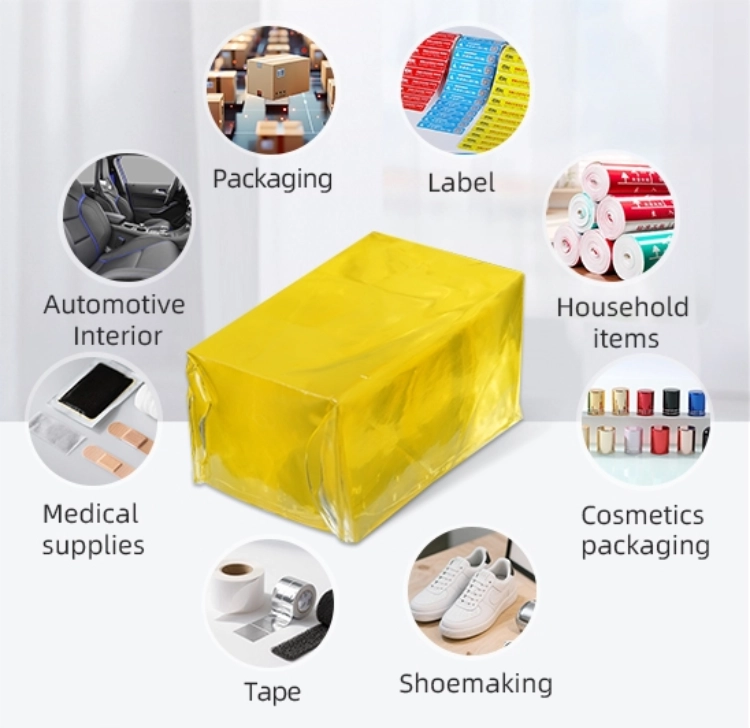
For XPE wall sticker production, BoiLing offers hot melt adhesive grades designed for coating applications involving XPE foam and other backing materials. Available packaging includes 0.6 kg and 1 kg adhesive blocks packed in 25 kg cartons.
When comparing grades, focus on coating viscosity, application temperature, foam adhesion, and the balance between long-term holding performance and clean removal. The specifications below provide a starting point for selecting samples, but final suitability should be verified on the actual wall sticker construction and intended painted surfaces.
Read the Data Sheet Alongside the Coating Conditions
The figures below describe the supplied wall sticker grade ranges. They narrow a sample request; they do not select the grade for a particular wall.
|
Item |
Listed range or material |
Detail to include in a trial |
|
Viscosity at 180°C |
2,000–5,000 cps |
Actual coating temperature and how evenly the line applies the adhesive |
|
Softening point |
85–110°C |
Holding performance at the intended service temperature |
|
Application temperature |
150–180°C |
Foam response and wetting; many wall sticker lines use 160–170°C |
|
Backing substrates |
PET film, PMMA sheet and XPE foam |
Exact surface that will receive the adhesive |
A softening point value of 110 °C does not mean the wall sticker can be used on surfaces reaching 110 °C. The long term load bearing performance of the panel under its own weight at high temperature requires separate practical testing. The viscosity column has a similar limit: it tells the coating operator about the melt at 180°C, without establishing how firmly it will bond to the foam.
Watch the Release Liner
Take a coated panel and pull the liner off slowly. Is the liner intact? Are there fibers left in the glue? Has any adhesive moved onto the liner? Note those observations before the panel goes onto the wall. Otherwise a fault introduced during liner removal may be mistaken for poor wall adhesion later.
Bedroom and kindergarten projects often bring requirements for odor and chemical‑safety documentation. In its product information, BoiLing lists test items including RoHS, 18 PAHs, formaldehyde, halogens, PFOS, PBBs and PBDEs.
Note that not every grade covers all listed test items; actual test scope depends on the corresponding batch report. BoiLing provides batch‑specific SGS test reports upon request. Always request reports linked to your exact adhesive grade and production batch; general range declarations cannot replace batch‑specific documentation for your test sample.
What the Block Wrapper Changes at the Melter
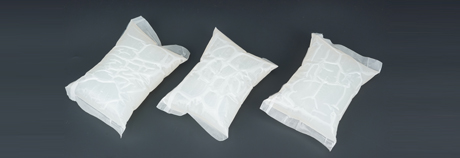
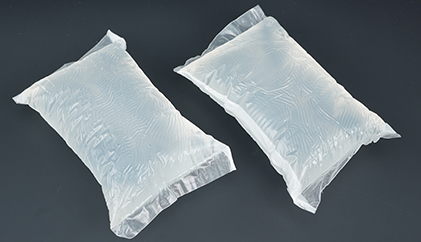
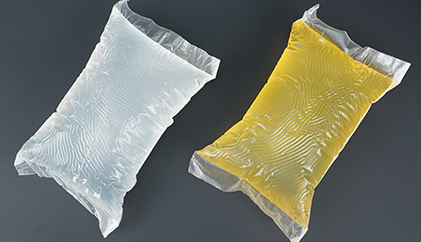
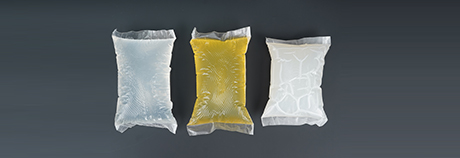
Conventional paper release wrappers must be stripped before feeding adhesive blocks into the melting tank. If paper fragments are accidentally fed into the melter, they may clog filters or nozzles. There is also the everyday job of collecting the discarded wrappers beside the feeding area.
BoiLing says its alternative film wrapper melts with the block, so operators can load it without peeling off paper. Get the wrapper specification before ordering and include a feeding run on the actual melter. Does anything collect in the equipment? Does feeding proceed without the stops seen with paper? Wrapper handling deserves a place in the production trial, even though it does not prove anything about paint-safe removal.
Arrange a Trial Before the Production Order
Use the regular coating equipment and operators for one trial roll. Prepare smooth painted gypsum, textured paint and an old-paint reference board. Keep enough panels for both cold application and the 23°C comparison. A month later, the person doing the peel may not be the person who coated the roll. Put the grade, settings, board finish and date on each sample now.
For the supplier discussion, have panel photographs and the line’s speed and coating method ready. The home decoration application page and adhesive product range provide starting points for that discussion. If the catalog samples still leave too much residue on the specified paint, take those results to the ODM and OEM formulation team when discussing a change.
FAQ
How Much Material Is Needed for Sampling and Production?
The stated sample quantity is usually 1–2 kg, with freight paid by the recipient. Stock-grade minimum orders begin at 500 kg; some models require 1,000 kg. Custom grades generally involve 2–3 tons. A sample request and an order for production are separate conversations, so get the minimum for the particular model in writing.
Can a Grade Be Adjusted for Removable Wall Stickers?
Adjustment is possible. First agree on the removal job: which paint, how many days or months on the wall, and at what temperature? Decide how much residue is acceptable too. The trial then has something concrete to check.
What Lead Time and Storage Conditions Are Stated?
Samples are quoted at three to five working days after requirements are agreed; stock grades at seven to ten working days. Store the blocks dry below 40°C. The stated shelf life is 12 months.
 Consult
 Whatsapp
 Leave Message
 top