








Table of Contents
Related news
Why Hook and Loop Backing Adhesive Fails: Separating Fastener Peel From Glue Line Failure
Keep both halves of a failed hook and loop assembly. The useful evidence is often on the faces that have just pulled apart: bare tape, glue on one side, or glue smeared across both. A report that says only “the Velcro came off” loses that evidence and can send the next adhesive trial in the wrong direction.
Begin by opening the sample and taking photographs. Then decide which part needs changing. If the hooks disengaged while both adhesive bonds stayed intact, a stronger backing glue would leave the original problem untouched.
Read the Failure Before Ordering Another Grade
Compare the Two Separated Faces
|
What remains after separation |
Likely area of failure |
Next investigation |
|
Both backing bonds remain intact, but the hooks and loops separate |
Fastener engagement, wear or tape specification |
Check the hook and loop pairing and the load |
|
Glue remains on one face; the opposite substrate is clean |
Adhesion at that interface |
Compare surface preparation and a grade suited to the exposed substrate |
|
Glue remains on both faces |
Cohesion within the adhesive |
Examine the glue layer and trial greater cohesion where appropriate |
These are starting clues. Record the temperature, applied load and time before failure alongside the photographs. “Glue on both sides after a week in heat” is a much more useful sample description than “low strength.” It tells the supplier which condition needs reproducing.
Name the Material That Touches the Adhesive
What exactly is on the glue-facing side of the tape? “Hook and loop” does not answer that question. In the supplier’s guidance, polypropylene injection hooks and polyester faces are among the easier bonding jobs; nylon gets separate attention when a formulation is proposed. Send a piece of the actual tape. That avoids spending a trial on a grade selected for a similar-looking backing made from another polymer.
There is a simple way to read the next pull test. If the backing lifts before the fastener opens, investigate the backing bond. If the fastener opens while the glue stays attached, return to the tape specification. The desired balance depends on the job, but it should be decided before comparing peel numbers.
Turn the End Use into a Trial Requirement
Decide Which Exposure Matters
Consider a curtain beside a sunlit window. Its weight stays on the fixing while the room warms up. A disposable mop brings another set of questions, including water contact. Write the requirement as a test condition: perhaps 60°C, a 24-hour water exposure or a 2 kg hanging weight. None of those examples means that every grade in the range has passed the test.
For cold weather applications, BoiLing lists a −30 °C bonding performance figure for selected grades. This performance value is valid only under defined test conditions including specific hook‑and‑loop substrate, bonded surface and applied load.Request full test conditions together with sample recommendations. Any cold‑temperature performance claim must be verified using your actual tape, target substrate and working load; isolated catalog figures cannot replace practical assembly testing.
Allow specimens for the first 24-hour check and another set for a week later. Use the same tape construction throughout a comparison. After water, heat or cold exposure, photograph the opened assembly again; a change in the break location may explain more than the force reading alone.
Compare the Published Grade Ranges
BoiLing provides hot melt adhesives for hook and loop backing applications, including curtains, disposable mops, car mats, and wire harness fixings. Different applications require different balances of adhesion, heat resistance, flexibility, and coating performance.
Our hot melt adhesive range includes grades developed for these applications. The specifications below can help narrow the selection, but the final choice should be based on the actual hook and loop backing material, coating conditions, and expected service environment.
|
Application |
Viscosity at 180°C in cps |
Softening point in °C |
|
Door curtain |
4,000–7,000 |
90–110 |
|
Window screen curtain |
3,500–7,000 |
80–110 |
|
Disposable mop |
2,500–6,000 |
70–100 |
|
Car floor mat |
2,000–7,000 |
80–110 |
|
Wire harness fixing |
1,500–3,000 |
75–90 |
All five groups list 150–180°C for application at the coating line. The softening-point column describes something else again, and should not be copied onto a finished product as its maximum working temperature. The loaded assembly still needs checking at the temperature specified for the finished product.
The grade names make a sample request more specific. For car mats, luggage, clothing or footwear with low adhesive use, the listed option is 705. Disposable mops have 701A. For a back-to-back harness fixing that must cut cleanly, ask about 3388T; for a screen or door curtain needing heat resistance, ask about 701E. A good result with one of these names on one product is not approval to substitute it everywhere else.
Notice the 70°C lower end for mop adhesive against 90°C for the door curtain. Before deciding that one is the better grade, return to the load and exposure of the product being made. A grade can be easy to coat and still be the wrong choice for that job. Car mat buyers may also need to discuss odor and VOC requirements within the automotive adhesive range.
Look at the Melter When Performance Changes During a Run
Investigate Deposits Before Raising the Temperature
It is common to observe good coating performance at the start of a production run, with defects emerging later during the shift. Before raising processing temperature, inspect tank walls, die and rollers for charred adhesive. Check whether adhesive material has been held at elevated temperature for excessive dwell time. Increasing temperature to offset contamination deposits will accelerate thermal degradation and worsen charring issues.
The feeding record matters here. Find out when the tank was filled and whether a different adhesive was used to top it up. An open tank also deserves attention as a possible route for contamination. Rotate stock and avoid holding more material at temperature than the run needs. On the shelf, blocks are specified for dry storage below 40°C, with 12 months as the stated storage life. Keep different grades separate unless their mixing has been approved by the supplier.
Check Color on the Actual Fabric
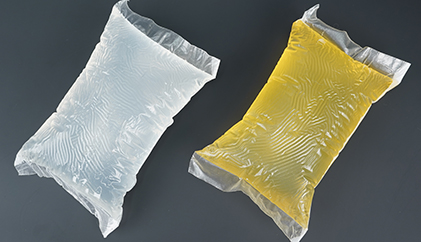
A yellow glue line may be acceptable under a dark car mat and visible through a pale ribbon. Lay the coated sample against the intended fabric before approving its appearance. The supplier’s formulation guidance mentions hydrogenated resins for customers seeking a paler, clearer result. Their effect extends beyond color to heat stability and weather resistance. Changing the resin also changes the formulator’s work on viscosity and polymer behavior, so the rest of the recipe may have to move with it.
Bring the fabric sample and the coating requirements to an ODM or OEM development discussion. The supplier’s application library offers further context for the end use. A request for “clear glue” alone gives the formulator little information about the bond it has to make.
FAQ
What Should Accompany a Sample Request?
Send the tape type, adhesive-facing material, melter model and the main field complaint to the sales engineering team. Add the service temperature and load, plus any water exposure. Include the two separated faces of a failed sample if they are available. Typical sample quantity is 1 2 kg; freight cost shall be borne by the recipient.
What Are the Minimum Orders and Lead Times?
Stock grades generally start at 500–1,000 kg. Allow for a larger order when discussing a special nylon backing or a change for the cutting line: the stated custom quantity is usually 2–3 tons. For stock shipments, the supplier quotes seven to ten working days. Get the applicable quantity and dispatch date on the order confirmation.
Can One Grade Cover Both Cold and Wet Conditions?
Do not assume it from a claim about either condition alone. Selected grades are offered for cold service or water-wash requirements within their stated limits. Tell the supplier what happens in use. Does the fixing get wet and then go into the cold, or are these two separate applications? Test the relevant sequence on the proposed assembly before approving the grade.
 Consult
 Whatsapp
 Leave Message
 top